


- Retrait en 2 heures
- Assortiment impressionnant
- Paiement sécurisé
- Toujours un magasin près de chez vous
- Retrait en 2 heures
- Assortiment impressionnant
- Paiement sécurisé
- Toujours un magasin près de chez vous



1,99 €
+ 1 points
Format
Description
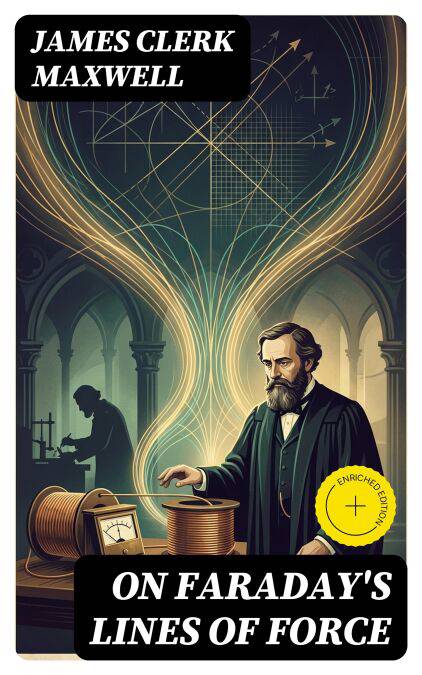
In "On Faraday's Lines of Force," James Clerk Maxwell presents a groundbreaking exploration of the nature of electromagnetic fields, encapsulating the scientific dialogue of the 19th century between physics and mathematics. The book employs a meticulous literary style, emphasizing clarity and rigor while employing visual metaphors to elucidate complex concepts. Within this text, Maxwell seeks to expand upon Michael Faraday's pioneering work, synthesizing his concepts of field theory and introducing mathematical formulations that laid the groundwork for modern electromagnetism. James Clerk Maxwell, a prominent Scottish physicist, was profoundly influenced by Faraday's intuitive approaches to electricity and magnetism. His academic background and teachings at the University of Cambridge substantially shaped his analytical thinking. Maxwell's desire to bridge the gap between theoretical mathematics and experimental physics inspired him to elucidate Faraday's ideas, developing a coherent framework that validated Faraday's experimental insights with mathematical precision. Highly recommended for scholars and enthusiasts alike, "On Faraday's Lines of Force" serves as both a historical document and a foundational text in the field of electromagnetism. Readers will gain invaluable insight not only into the science of the era but also into the minds that shaped our understanding of the forces that govern the universe.
In this enriched edition, we have carefully created added value for your reading experience:
- A succinct Introduction situates the work's timeless appeal and themes.
- The Synopsis outlines the central plot, highlighting key developments without spoiling critical twists.
- A detailed Historical Context immerses you in the era's events and influences that shaped the writing.
- An Author Biography reveals milestones in the author's life, illuminating the personal insights behind the text.
- A thorough Analysis dissects symbols, motifs, and character arcs to unearth underlying meanings.
- Reflection questions prompt you to engage personally with the work's messages, connecting them to modern life.
- Hand‐picked Memorable Quotes shine a spotlight on moments of literary brilliance.
- Interactive footnotes clarify unusual references, historical allusions, and archaic phrases for an effortless, more informed read.
In this enriched edition, we have carefully created added value for your reading experience:
- A succinct Introduction situates the work's timeless appeal and themes.
- The Synopsis outlines the central plot, highlighting key developments without spoiling critical twists.
- A detailed Historical Context immerses you in the era's events and influences that shaped the writing.
- An Author Biography reveals milestones in the author's life, illuminating the personal insights behind the text.
- A thorough Analysis dissects symbols, motifs, and character arcs to unearth underlying meanings.
- Reflection questions prompt you to engage personally with the work's messages, connecting them to modern life.
- Hand‐picked Memorable Quotes shine a spotlight on moments of literary brilliance.
- Interactive footnotes clarify unusual references, historical allusions, and archaic phrases for an effortless, more informed read.
Spécifications
Parties prenantes
- Auteur(s) :
- Editeur:
Contenu
- Nombre de pages :
- 61
- Langue:
- Anglais
Caractéristiques
- EAN:
- 8596547724926
- Date de parution :
- 16-11-2023
- Format:
- Ebook
- Protection digitale:
- Digital watermarking
- Format numérique:
- ePub


Seulement chez Librairie Club
+ 1 points sur votre carte client de Librairie Club
Cadeau


Les avis
Nous publions uniquement les avis qui respectent les conditions requises. Consultez nos conditions pour les avis.