


- Retrait en 2 heures
- Assortiment impressionnant
- Paiement sécurisé
- Toujours un magasin près de chez vous
- Retrait en 2 heures
- Assortiment impressionnant
- Paiement sécurisé
- Toujours un magasin près de chez vous



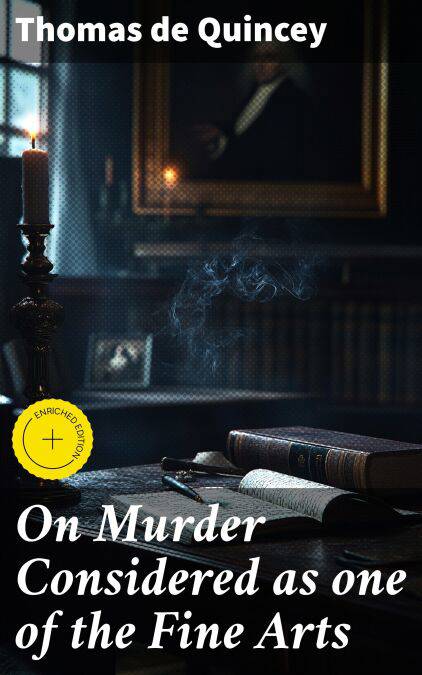
On Murder Considered as one of the Fine Arts EBOOK
Enriched edition. Unveiling the Art of Murder: A Literary Exploration of Violence and Psychology in the 19th Century
Thomas de Quincey
Ebook | Anglais
0,99 €
1,99 €
Format
Description
In "On Murder Considered as one of the Fine Arts," Thomas de Quincey presents a provocative analysis that intertwines aesthetics and ethics within the context of murder. Written in a fluid yet incisive prose style characteristic of the Romantic era, this essay examines the artistic dimensions of murder as an act, rather than solely a moral failing. De Quincey dissects historical murder cases, particularly focusing on the sensationalism surrounding them, revealing how society often elevates such acts to a disturbing form of art. His exploration of the soul's darkest impulses, couched in a blend of philosophical inquiry and anecdotal evidence, challenges conventional perceptions of crime and beauty, ultimately reflecting the intricate relationship between violence and the human condition. Thomas de Quincey, an influential essayist and philosopher, is best known for his work in the Romantic movement, which scrutinized the complexities of morality and human experience. His own tumultuous life, marked by addiction and profound introspection, informed his fascination with the macabre. De Quincey's previous writings on substance use and literary critiques set the stage for this groundbreaking essay, positioning him as an innovator who sought to provoke thought about societal norms and personal darkness. For readers drawn to the intersections of art and morality, "On Murder Considered as one of the Fine Arts" is an essential work that compels one to confront uncomfortable truths about the human psyche. This text is not only relevant for scholars of Victorian literature but also for anyone intrigued by the philosophical implications of violence and its portrayal in society. De Quincey's engagement with such themes urges readers to reevaluate the often ambiguous line between beauty and horror.
In this enriched edition, we have carefully created added value for your reading experience:
- A succinct Introduction situates the work's timeless appeal and themes.
- The Synopsis outlines the central plot, highlighting key developments without spoiling critical twists.
- A detailed Historical Context immerses you in the era's events and influences that shaped the writing.
- An Author Biography reveals milestones in the author's life, illuminating the personal insights behind the text.
- A thorough Analysis dissects symbols, motifs, and character arcs to unearth underlying meanings.
- Reflection questions prompt you to engage personally with the work's messages, connecting them to modern life.
- Hand‐picked Memorable Quotes shine a spotlight on moments of literary brilliance.
- Interactive footnotes clarify unusual references, historical allusions, and archaic phrases for an effortless, more informed read.
In this enriched edition, we have carefully created added value for your reading experience:
- A succinct Introduction situates the work's timeless appeal and themes.
- The Synopsis outlines the central plot, highlighting key developments without spoiling critical twists.
- A detailed Historical Context immerses you in the era's events and influences that shaped the writing.
- An Author Biography reveals milestones in the author's life, illuminating the personal insights behind the text.
- A thorough Analysis dissects symbols, motifs, and character arcs to unearth underlying meanings.
- Reflection questions prompt you to engage personally with the work's messages, connecting them to modern life.
- Hand‐picked Memorable Quotes shine a spotlight on moments of literary brilliance.
- Interactive footnotes clarify unusual references, historical allusions, and archaic phrases for an effortless, more informed read.
Spécifications
Parties prenantes
- Auteur(s) :
- Editeur:
Contenu
- Nombre de pages :
- 29
- Langue:
- Anglais
Caractéristiques
- EAN:
- 4064066430511
- Date de parution :
- 07-12-2020
- Format:
- Ebook
- Protection digitale:
- Digital watermarking
- Format numérique:
- ePub


Seulement chez Librairie Club
Cadeau


Les avis
Nous publions uniquement les avis qui respectent les conditions requises. Consultez nos conditions pour les avis.