


En raison d'une grève chez bpost, votre colis sera expédié par GLS afin d’assurer une livraison dans les meilleurs délais.
- Retrait en 2 heures
- Assortiment impressionnant
- Paiement sécurisé
- Toujours un magasin près de chez vous
En raison d'une grève chez bpost, votre colis sera expédié par GLS afin d’assurer une livraison dans les meilleurs délais.
- Retrait en 2 heures
- Assortiment impressionnant
- Paiement sécurisé
- Toujours un magasin près de chez vous


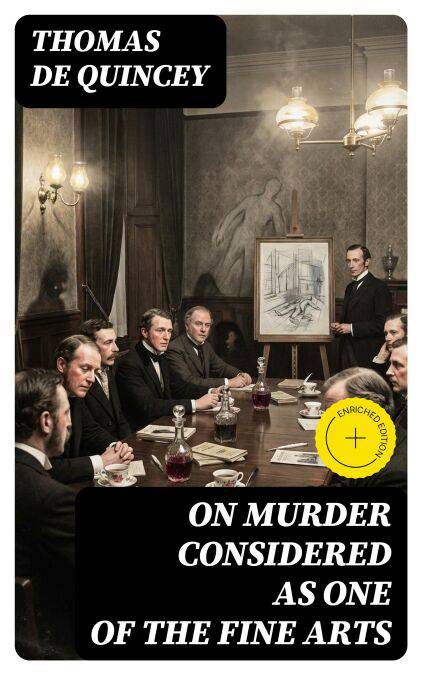
On Murder Considered as one of the Fine Arts EBOOK
Enriched edition.
Thomas de Quincey
Ebook | Anglais
0,99 €
1,99 €
Format
Description
In "On Murder Considered as one of the Fine Arts," Thomas de Quincey ventures into a provocative exploration of aesthetics and morality against the backdrop of early 19th-century Britain. This remarkable essay employs a distinctive blend of dark humor and philosophical inquiry, challenging the reader to contemplate murder not just as an act of violence but as an artistic phenomenon worthy of scrutiny and appreciation. De Quincey's lyrical prose and intricate rhetorical style enhance the literary merit of the text, positioning it within the canon of Gothic literature and early criminal psychology, as he dissects the motivations of both murderer and audience in a meticulously structured narrative that balances grotesque fascination with moral complexity. De Quincey, a notable figure of the Romantic movement, drew upon his own tumultuous experiences and opium use, navigating the realms of addiction and intellectual exploration. His introspective writings often reflect upon darker aspects of human nature, which profoundly informed his unique perspective on violence and beauty. This work encapsulates not only his intellectual milieu but also the broader cultural currents of a society grappling with the implications of violence captured in popular media and societal narratives. "On Murder Considered as one of the Fine Arts" is essential reading for anyone seeking to understand the intersection of art and ethics, as well as the philosophical underpinnings of violence in literature. De Quincey's nuanced argumentation invites readers to appreciate the aesthetic dimensions of even the darkest human actions, making this text a compelling and unsettling exploration of art's moral territory.
In this enriched edition, we have carefully created added value for your reading experience:
- A succinct Introduction situates the work's timeless appeal and themes.
- The Synopsis outlines the central plot, highlighting key developments without spoiling critical twists.
- A detailed Historical Context immerses you in the era's events and influences that shaped the writing.
- An Author Biography reveals milestones in the author's life, illuminating the personal insights behind the text.
- A thorough Analysis dissects symbols, motifs, and character arcs to unearth underlying meanings.
- Reflection questions prompt you to engage personally with the work's messages, connecting them to modern life.
- Hand‐picked Memorable Quotes shine a spotlight on moments of literary brilliance.
- Interactive footnotes clarify unusual references, historical allusions, and archaic phrases for an effortless, more informed read.
In this enriched edition, we have carefully created added value for your reading experience:
- A succinct Introduction situates the work's timeless appeal and themes.
- The Synopsis outlines the central plot, highlighting key developments without spoiling critical twists.
- A detailed Historical Context immerses you in the era's events and influences that shaped the writing.
- An Author Biography reveals milestones in the author's life, illuminating the personal insights behind the text.
- A thorough Analysis dissects symbols, motifs, and character arcs to unearth underlying meanings.
- Reflection questions prompt you to engage personally with the work's messages, connecting them to modern life.
- Hand‐picked Memorable Quotes shine a spotlight on moments of literary brilliance.
- Interactive footnotes clarify unusual references, historical allusions, and archaic phrases for an effortless, more informed read.
Spécifications
Parties prenantes
- Auteur(s) :
- Editeur:
Contenu
- Nombre de pages :
- 29
- Langue:
- Anglais
Caractéristiques
- EAN:
- 8596547021377
- Date de parution :
- 28-05-22
- Format:
- Ebook
- Protection digitale:
- Digital watermarking
- Format numérique:
- ePub



Seulement chez Librairie Club
Cadeau


Les avis
Nous publions uniquement les avis qui respectent les conditions requises. Consultez nos conditions pour les avis.