


- Retrait en 2 heures
- Assortiment impressionnant
- Paiement sécurisé
- Toujours un magasin près de chez vous
- Retrait en 2 heures
- Assortiment impressionnant
- Paiement sécurisé
- Toujours un magasin près de chez vous



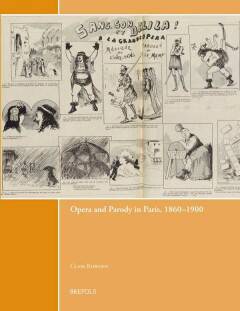
Opera and Parody in Paris, 1860-1900
Clair Rowden
84,80 €
+ 169 points
Description
This study interrogates press caricatures and cartoons, staged revue and opera parodies to reveal the role they play within the Parisian theatrical, social and cultural sphere. From the beginnings of Wagner reception in Paris, through the heyday of opra-bouffe in the hands of that comic genius Herv, to the international operatic repertoire played on Parisian stages in the 1890s especially works by Verdi and Wagner performed during an increasingly tense nationalist climate alongside those by Massenet, Reyer and Saint-Sans this book examines the workings of parody which draws on opera for its subject material, its appeal, and for whom. Parodys repetition of dramatic and musical conventions is compounded by the abundance of revue shows on Parisian stages, by prolific authors such as Clairville, which deftly used well-known opera and operetta repertoire alongside the scie that popular tune given new words countless times over to create new yet familiar theatrical experiences. Indeed, by the 1890s, the words and musics of Faust, Carmen and Guillaume Tell in particular, held resonant value to signify the operatic. Aside from political caricature in which the figure of Wagner became embroiled, the ways in which parody brings together the high and the low to mock cultural norms, to neutralise alterity or innovation and refocus commentary onto internal, local, conventional and legitimised cultural products and debates becomes apparent. Opera and Parody in Paris, 18601900 thus uncovers a huge amount of primary and hitherto unpublished sources in an analysis of highly appealing intermedial materials that dominated Parisian print and stage culture in the late-nineteenth century.
Spécifications
Parties prenantes
- Auteur(s) :
- Editeur:
Contenu
- Nombre de pages :
- 220
- Langue:
- Anglais
- Collection :
Caractéristiques
- EAN:
- 9782503583624
- Date de parution :
- 11-09-20
- Format:
- Livre broché
- Format numérique:
- Trade paperback (VS)
- Dimensions :
- 218 mm x 280 mm
- Poids :
- 612 g


Seulement chez Librairie Club
+ 169 points sur votre carte client de Librairie Club
Cadeau


Les avis
Nous publions uniquement les avis qui respectent les conditions requises. Consultez nos conditions pour les avis.