


- Retrait en 2 heures
- Assortiment impressionnant
- Paiement sécurisé
- Toujours un magasin près de chez vous
- Retrait en 2 heures
- Assortiment impressionnant
- Paiement sécurisé
- Toujours un magasin près de chez vous



88,45 €
+ 176 points
Format
Description
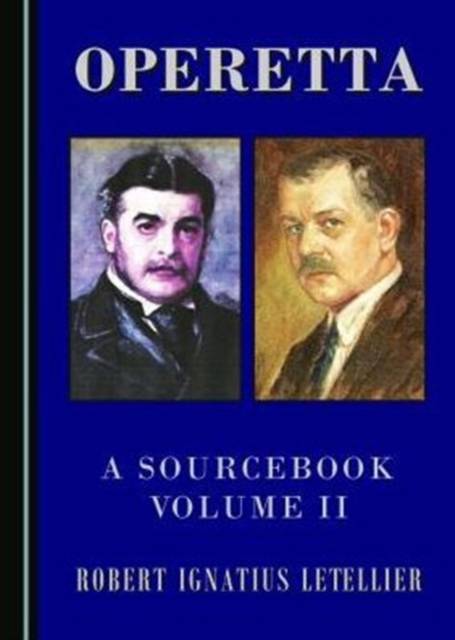
Operetta developed in the second half of the 19th century from the French opera-comique and the more lighthearted German Singspiel. As the century progressed, the serious concerns of mainstream opera were sustained and intensified, leaving a gap between opera-comique and vaudeville that necessitated a new type of stage work. Jacques Offenbach, son of a Cologne synagogue cantor, established himself in Paris with his series of operas-bouffes. The popular success of this individual new form of entertainment light, humorous, satirical and also sentimental led to the emergence of operetta as a separate genre, an art form with its own special flavour and concerns, and no longer simply a little opera. Attempts to emulate Offenbach's success in France and abroad generated other national schools of operetta and helped to establish the genre internationally, in Spain, in England, and especially in Austria Hungary. Here it inspired works by Franz von Suppe and Johann Strauss II (the Golden Age), and later Franz Lehar and Emmerich Kalman (the Silver Age). Viennese operetta flourished conterminously with the Habsburg Empire and the mystique of Vienna, but, after the First World War, an artistically vibrant Berlin assumed this leading position (with Paul Lincke, Leon Jessel and Edouard Kunnecke). As popular musical tastes diverged more and more during the interwar years, with the advent of new influences-like those of cabaret, the revue, jazz, modern dance music and the cinema, as well as changing social mores-the operetta genre took on new guises. This was especially manifested in the musical comedy of London's West End and New York's Broadway, with their imitators generating a success that opened a new golden age for the reinvented genre, especially after the Second World War.This source book presents an overview of the operetta genre in all its forms. The second volume provides a survey of the national schools of Germany, Spain, England, America, the Slavonic countries (especially Russia), Hungary, Italy and Greece. The principal composers are considered in chronological sequence, with biographical material and a list of stage works, selected synopses and some commentary. This volume also contains a discography and an index covering both volumes (general entries, singers and theatres).
Spécifications
Parties prenantes
- Auteur(s) :
- Editeur:
Contenu
- Nombre de pages :
- 500
- Langue:
- Anglais
Caractéristiques
- EAN:
- 9781443868174
- Date de parution :
- 04-06-15
- Format:
- Livre relié
- Format numérique:
- Genaaid
- Dimensions :
- 150 mm x 208 mm
- Poids :
- 1179 g


Seulement chez Librairie Club
+ 176 points sur votre carte client de Librairie Club
Cadeau


Les avis
Nous publions uniquement les avis qui respectent les conditions requises. Consultez nos conditions pour les avis.