


- Retrait en 2 heures
- Assortiment impressionnant
- Paiement sécurisé
- Toujours un magasin près de chez vous
- Retrait gratuit dans votre magasin Club
- 7.000.0000 titres dans notre catalogue
- Payer en toute sécurité
- Toujours un magasin près de chez vous



1,99 €
+ 1 points
Description
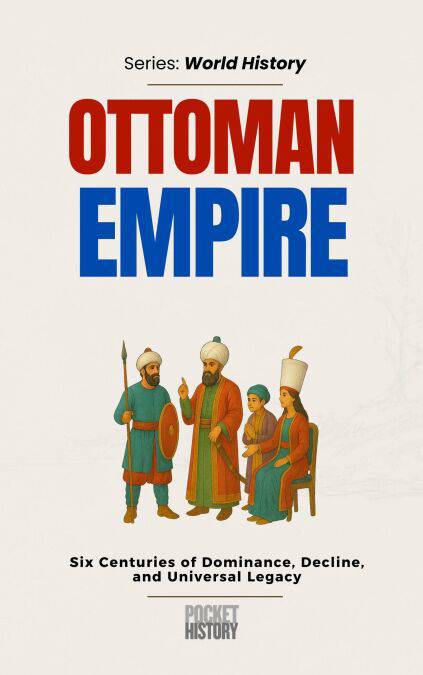
The Ottoman Empire stood for more than six centuries as one of the most powerful and influential states in world history. Emerging from a small Anatolian principality at the end of the thirteenth century, it grew into a vast empire that spanned Southeast Europe, Western Asia, and North Africa. This book offers a clear and compelling account of the Ottoman rise, expansion, administration, and eventual decline.
Beginning with Osman I and the early ghazi warriors, the narrative follows the dramatic conquest of Constantinople in 1453 under Mehmed II, an event that reshaped the balance of power between Europe and the Islamic world. Under Suleiman the Magnificent, the empire reached its political and cultural peak, controlling key trade routes and commanding formidable military forces, including the elite Janissaries.
Beyond warfare and conquest, the book explores the sophisticated administrative system that allowed the Ottomans to govern diverse religious and ethnic communities through the millet system. It examines economic networks, artistic achievements, architectural masterpieces, and legal traditions that defined Ottoman civilization.
The story continues through the challenges of modernization, the Tanzimat reforms, rising nationalism, and the empire's final collapse after World War I. Concise yet comprehensive, this study reveals how the Ottoman Empire shaped the modern Middle East, the Balkans, and global history.
Spécifications
Parties prenantes
- Auteur(s) :
- Editeur:
Contenu
- Langue:
- Anglais
- Collection :
Caractéristiques
- EAN:
- 9798232108915
- Date de parution :
- 26-02-26
- Format:
- Ebook
- Protection digitale:
- /
- Format numérique:
- ePub



Seulement chez Librairie Club
+ 1 points sur votre carte client de Librairie Club
Cadeau

Cadeau


Les avis
Nous publions uniquement les avis qui respectent les conditions requises. Consultez nos conditions pour les avis.