


- Retrait en 2 heures
- Assortiment impressionnant
- Paiement sécurisé
- Toujours un magasin près de chez vous
- Retrait gratuit dans votre magasin Club
- 7.000.0000 titres dans notre catalogue
- Payer en toute sécurité
- Toujours un magasin près de chez vous



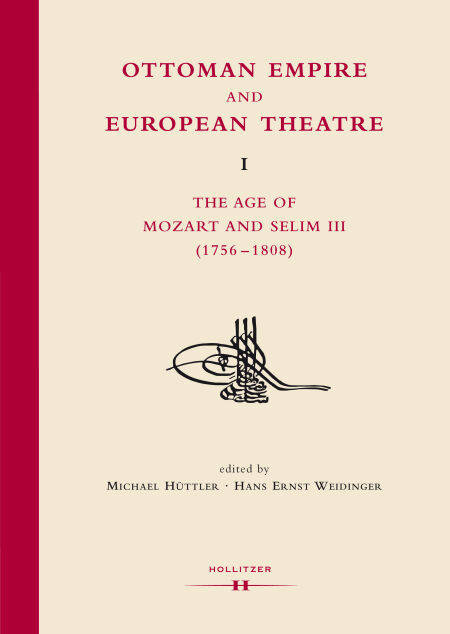
Ottoman Empire and European Theatre Vol. I EBOOK
The Age of Mozart and Selim III (1756-1808)
49,99 €
+ 49 points
Format
Description
The first volume of the book series
Ottoman Empire and European Theatre focuses on the period between 1756 and 1808, the era of W. A. Mozart (1756-1791) and Sultan Selim III (1761-1808). These historical personalities, whose life-spans overlap, were towering figures of their time: Mozart as an extraordinary composer and Selim III as both a politician and a composer.
Inspired by the structure of opera, the forty-four contributions of Volume I are arranged in eight sections, entitled Ouverture, Prologue, Acts I-V and Epilogue. The Ouverture includes the opening speeches of diplomats, politicians, and scholars as well as a memorial text for the "Genius of Opera", Turkish prima donna Leyla Gencer (1928-2008). The Prologue, "The Stage of Politics", features texts by distinguished historians who give an historical overview of the Ottoman Empire and Europe in the late eighteenth century, from both Turkish and Austrian points of view. Act I features texts concerning "Diplomacy and Theatre", and Act II takes the reader to "Europe South, West and North". Act III has contributions concerning theatre in "Central Europe", while Act IV deals with "Mozart" and the world of the seraglio. Act V turns our attention to the Ottoman "Sultan Selim III", and the Epilogue considers literary and theatrical adventures of "The Hero in the Sultan's Harem".
Contributions by Metin And, Emre Araci, Tülay Artan, Esin Akalin, Thomas Betzwieser, Annemarie Bönsch, Emil Brix, Christian Brunmayr, Bertrand Michael Buchmann, Aysin Candan, Helga Dostal, Erich Duda, Wolfgang Greisenegger, Heidemaria Gürer, Matthew Head, Caroline Herfert, Bent Holm, Frank Huss, Michael Hüttler, Nadja Kayali, Hans-Peter Kellner, Alexandre Lhâa, Isabelle Moindrot, Ilber Ortayli, Zeynep Oral, Cemal Öztas, William F. Parmentier, Matthias J. Pernerstorfer, Gabriele C. Pfeiffer, Walter Puchner, Günsel Renda, Mustafa Fatih Salgar, Ulrike Schneider, Selin Ipek, Käthe Springer-Dissmann, Suna Suner, Marianne Travén, B. Babür Turna, Derek Weber, Mehmet Alaaddin Yalçinkaya, Selim Yenel.
Ottoman Empire and European Theatre focuses on the period between 1756 and 1808, the era of W. A. Mozart (1756-1791) and Sultan Selim III (1761-1808). These historical personalities, whose life-spans overlap, were towering figures of their time: Mozart as an extraordinary composer and Selim III as both a politician and a composer.
Inspired by the structure of opera, the forty-four contributions of Volume I are arranged in eight sections, entitled Ouverture, Prologue, Acts I-V and Epilogue. The Ouverture includes the opening speeches of diplomats, politicians, and scholars as well as a memorial text for the "Genius of Opera", Turkish prima donna Leyla Gencer (1928-2008). The Prologue, "The Stage of Politics", features texts by distinguished historians who give an historical overview of the Ottoman Empire and Europe in the late eighteenth century, from both Turkish and Austrian points of view. Act I features texts concerning "Diplomacy and Theatre", and Act II takes the reader to "Europe South, West and North". Act III has contributions concerning theatre in "Central Europe", while Act IV deals with "Mozart" and the world of the seraglio. Act V turns our attention to the Ottoman "Sultan Selim III", and the Epilogue considers literary and theatrical adventures of "The Hero in the Sultan's Harem".
Contributions by Metin And, Emre Araci, Tülay Artan, Esin Akalin, Thomas Betzwieser, Annemarie Bönsch, Emil Brix, Christian Brunmayr, Bertrand Michael Buchmann, Aysin Candan, Helga Dostal, Erich Duda, Wolfgang Greisenegger, Heidemaria Gürer, Matthew Head, Caroline Herfert, Bent Holm, Frank Huss, Michael Hüttler, Nadja Kayali, Hans-Peter Kellner, Alexandre Lhâa, Isabelle Moindrot, Ilber Ortayli, Zeynep Oral, Cemal Öztas, William F. Parmentier, Matthias J. Pernerstorfer, Gabriele C. Pfeiffer, Walter Puchner, Günsel Renda, Mustafa Fatih Salgar, Ulrike Schneider, Selin Ipek, Käthe Springer-Dissmann, Suna Suner, Marianne Travén, B. Babür Turna, Derek Weber, Mehmet Alaaddin Yalçinkaya, Selim Yenel.
Spécifications
Parties prenantes
- Editeur:
Contenu
- Nombre de pages :
- 1036
- Langue:
- Anglais
- Collection :
Caractéristiques
- EAN:
- 9783990120675
- Date de parution :
- 14-06-13
- Format:
- Ebook
- Protection digitale:
- Digital watermarking
- Format numérique:
- ePub

Seulement chez Librairie Club
+ 49 points sur votre carte client de Librairie Club
Cadeau

Cadeau


Les avis
Nous publions uniquement les avis qui respectent les conditions requises. Consultez nos conditions pour les avis.