


- Retrait en 2 heures
- Assortiment impressionnant
- Paiement sécurisé
- Toujours un magasin près de chez vous
- Retrait en 2 heures
- Assortiment impressionnant
- Paiement sécurisé
- Toujours un magasin près de chez vous



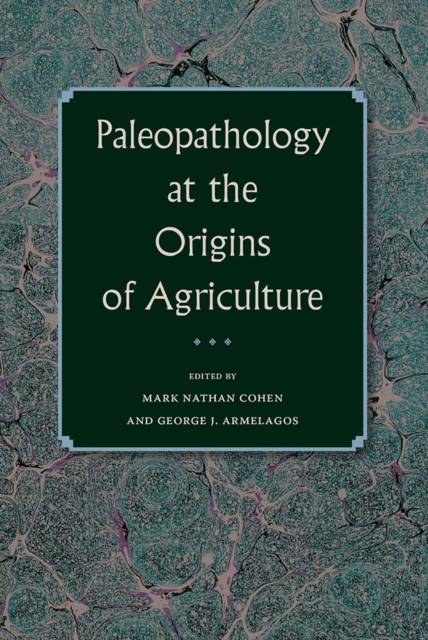
Paleopathology at the Origins of Agriculture
60,95 €
+ 121 points
Description
"Makes an important contribution to our understanding of the challenges our ancestors faced during the transition from hunting and gathering to agriculture. . . . A well-organized and highly readable volume that synthesizes an enormous amount of data on what is perhaps the most significant economic transformation in the history of our species."--American Anthropologist
In 1982, the Conference on Paleopathology and Socioeconomic Change at the Origins of Agriculture was held in Plattsburgh, New York, to examine previously untested theories about how the adoption of agriculture had impacted human health. The collection of those conference proceedings transformed into this landmark book that set the standard for how to collect, analyze, and interpret osteological data in the study of health transitions. Using skeletal pathologies, the contributors examine how the transition from foraging to farming affected human health and nutrition.
Now back in print and for the first time in paperback, Paleopathology at the Origins of Agriculture is a foundational piece in bioarchaeological literature and a central source of information regarding the impact of early farming on socioeconomic evolution. It remains a highly cited reference for archaeologists and physical anthropologists. Contributors present data from nineteen different regions before, during, and after agricultural transitions, analyzing populations in Africa, Asia, the Middle East, Europe, and South America while primarily focusing on North America. A wide range of health indicators are discussed, including mortality, episodic stress, physical trauma, degenerative bone conditions, isotopes, and dental pathology.
Mark Nathan Cohen is Distinguished Professor of anthropology at SUNY at Plattsburgh. He was awarded a Guggenheim Fellowship on the basis of this book's impact. George J. Armelagos is the Goodrich C. White professor of anthropology at Emory University and a recipient of the Viking Fund Medal.
Spécifications
Parties prenantes
- Editeur:
Contenu
- Nombre de pages :
- 640
- Langue:
- Anglais
- Collection :
Caractéristiques
- EAN:
- 9780813044897
- Date de parution :
- 30-04-13
- Format:
- Livre broché
- Format numérique:
- Trade paperback (VS)
- Dimensions :
- 152 mm x 229 mm
- Poids :
- 952 g


Seulement chez Librairie Club
+ 121 points sur votre carte client de Librairie Club
Cadeau


Les avis
Nous publions uniquement les avis qui respectent les conditions requises. Consultez nos conditions pour les avis.