


- Retrait en 2 heures
- Assortiment impressionnant
- Paiement sécurisé
- Toujours un magasin près de chez vous
- Retrait en 2 heures
- Assortiment impressionnant
- Paiement sécurisé
- Toujours un magasin près de chez vous



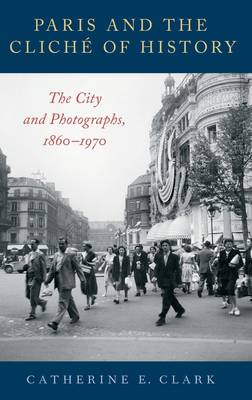
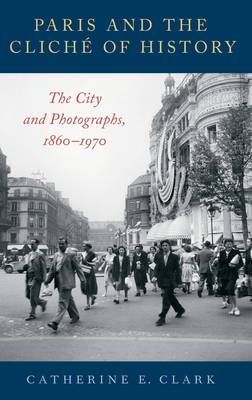
Paris and the Cliché of History
The City and Photographs, 1860-1970
Catherine E Clark
Livre relié | Anglais
185,45 €
+ 370 points
Description
This book turns a compelling new lens on thinking about the history of Paris and photography. The invention of photography changed how history could be written. But the now commonplace assumptions--that photographs capture fragments of lost time or present emotional gateways to the past--that structure today's understandings did not emerge whole cloth in 1839. Focusing on one of photography's birthplaces, Paris and the Clich� of History tells the story of how photographs came to be imagined as documents of the past. Author Catherine E. Clark analyzes photography's effects on historical interpretation by examining the formation of Paris's first photo archives at the Mus�e Carnavalet and the city's municipal library, their use in illustrated history books and historical exhibitions and reconstructions such as the 1951 celebration of Paris's 2000th birthday, and the public's contribution to the historical record in amateur photo contests. Despite the photograph's growing importance in these forums, it did not simply replace older forms of illustration, visual documentation, or written text. Photos worked in complex and shifting relation to other types of pictures as photographers, popular historians, and publishers built on the traditions and iconography of painting and engraving in order to both document the past scientifically and objectively and to reconstruct it romantically. In doing so, they not only influenced how Parisians thought about the city's past and how they pictured it; they also ensured that these images shaped how Parisians lived their own lives--especially in deeply charged moments such as the Liberation after World War II. This history of picturing Paris does not simply reflect the city's history: it is Parisian history.
Spécifications
Parties prenantes
- Auteur(s) :
- Editeur:
Contenu
- Nombre de pages :
- 328
- Langue:
- Anglais
Caractéristiques
- EAN:
- 9780190681647
- Date de parution :
- 16-08-18
- Format:
- Livre relié
- Format numérique:
- Genaaid
- Dimensions :
- 157 mm x 236 mm
- Poids :
- 739 g


Seulement chez Librairie Club
+ 370 points sur votre carte client de Librairie Club
Cadeau


Les avis
Nous publions uniquement les avis qui respectent les conditions requises. Consultez nos conditions pour les avis.