


- Retrait en 2 heures
- Assortiment impressionnant
- Paiement sécurisé
- Toujours un magasin près de chez vous
- Retrait en 2 heures
- Assortiment impressionnant
- Paiement sécurisé
- Toujours un magasin près de chez vous



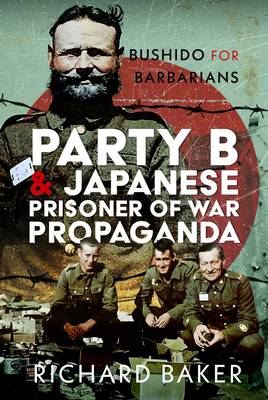
Party B and Japanese Prisoner of War Propaganda
Bushido for Barbarians
Richard Baker
Livre relié | Anglais
34,95 €
+ 69 points
Description
Party B and Japanese Prisoner of War Propaganda gives the first full account of the experiences of a group of a thousand wartime British and Australian prisoners of the Japanese, 'Party B', who in 1942 were shipped from Changi camp in Singapore to Korea for propaganda purposes. It traces their experiences from their arrival in Singapore until release. In doing so, it offers the first account of Japanese POW propaganda during the Pacific War.
The men of Party B were exploited for every aspect of Japanese propaganda. They were filmed, photographed, recorded and publicly humiliated. They were made to write letters home and messages for radio broadcasts telling the outside world of their humane treatment; journalists interviewed them for accounts of Japanese prowess in battle to raise the morale of the home audience. They were given essays to write and questionnaires to answer, designed to yield information useful for creating propaganda. They were also allowed to keep diaries which the Japanese read to gain an insight into the enemy psychology.
As well as examining the three Korean camps, Keijo, Jinsen and Konan, the book also explores conditions at Mukden (Hoten) camp, where a hundred men from the party were later sent. The camp has become notorious for the visits by the biological warfare group, Unit 731, and the book adds to our knowledge of this camp by demonstrating that a great deal of the 'evidence' that has been claimed as proof of experiments on the prisoners in fact relate to the camp's propaganda function.
Using archival evidence from the International Committee of the Red Cross headquarters in Geneva, the book also adds significantly to knowledge of the organisation's work during World War ll, arguing that that the organisation was only allowed a presence in Japanese territories for propaganda purposes.
The men of Party B were exploited for every aspect of Japanese propaganda. They were filmed, photographed, recorded and publicly humiliated. They were made to write letters home and messages for radio broadcasts telling the outside world of their humane treatment; journalists interviewed them for accounts of Japanese prowess in battle to raise the morale of the home audience. They were given essays to write and questionnaires to answer, designed to yield information useful for creating propaganda. They were also allowed to keep diaries which the Japanese read to gain an insight into the enemy psychology.
As well as examining the three Korean camps, Keijo, Jinsen and Konan, the book also explores conditions at Mukden (Hoten) camp, where a hundred men from the party were later sent. The camp has become notorious for the visits by the biological warfare group, Unit 731, and the book adds to our knowledge of this camp by demonstrating that a great deal of the 'evidence' that has been claimed as proof of experiments on the prisoners in fact relate to the camp's propaganda function.
Using archival evidence from the International Committee of the Red Cross headquarters in Geneva, the book also adds significantly to knowledge of the organisation's work during World War ll, arguing that that the organisation was only allowed a presence in Japanese territories for propaganda purposes.
Spécifications
Parties prenantes
- Auteur(s) :
- Editeur:
Contenu
- Nombre de pages :
- 224
- Langue:
- Anglais
Caractéristiques
- EAN:
- 9781036190309
- Date de parution :
- 30-10-26
- Format:
- Livre relié
- Format numérique:
- Genaaid
- Dimensions :
- 159 mm x 235 mm


Seulement chez Librairie Club
+ 69 points sur votre carte client de Librairie Club
Cadeau


Les avis
Nous publions uniquement les avis qui respectent les conditions requises. Consultez nos conditions pour les avis.