


- Retrait en 2 heures
- Assortiment impressionnant
- Paiement sécurisé
- Toujours un magasin près de chez vous
- Retrait en 2 heures
- Assortiment impressionnant
- Paiement sécurisé
- Toujours un magasin près de chez vous



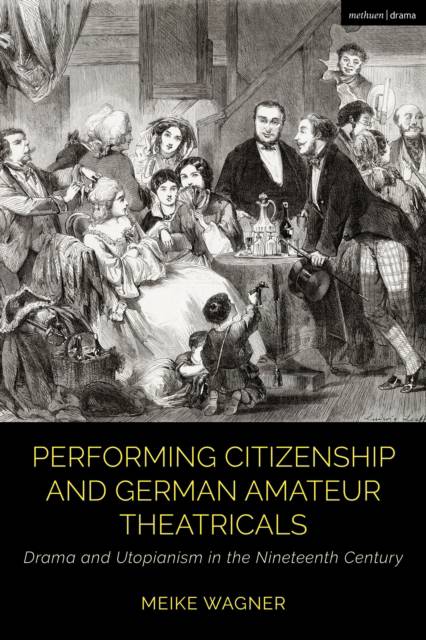
Performing Citizenship and German Amateur Theatricals
Drama and Utopianism in the Nineteenth Century
Meike Wagner
195,45 €
+ 390 points
Description
This open access book proposes a revision of 19th-century theatre history and examines the contribution of amateur theatre practice to European theatre, by shifting the focus to theatre as a cultural, social and aesthetic practice.
Non-professional theatre practice has been largely neglected due to deeply rooted prejudice about its aesthetic standards: a prejudice whose origins can be traced back to influential thinkers in the 18th century. Although it was a massive phenomenon in Europe around 1800, amateur theatre has been overshadowed by professional theatre through a privileging of literary and canonical perspectives in the writing of history. This book argues that amateur theatricals contributed to mainstreaming key concepts of aesthetic education and identity building, as well as establishing educative and aesthetic concepts of bourgeois theatre. Amateur theatres not only provide their audiences with an aesthetic experience, they also give their members the opportunity to become involved in social gatherings and performative schemes of self-learning and self-education. During the late Enlightenment, amateur theatres became an important medium to practice and promote concepts of citizenship and the idea of theatre as a key educational factor in society. Focusing on German-speaking amateur theatricals, with regard to a larger frame of European cultural history, this study investigates how citizen identities were shaped and consolidated through amateur performance practices on page, on stage and behind the scenes. The ebook editions of this book are available open access under a CC BY-NC-ND licence on bloomsburycollections.com. Open access was funded by the European Research Council (ERC) under the European Union's Horizon 2020 research and innovation programme.Spécifications
Parties prenantes
- Auteur(s) :
- Editeur:
Contenu
- Nombre de pages :
- 264
- Langue:
- Anglais
- Collection :
Caractéristiques
- EAN:
- 9781350284401
- Date de parution :
- 22-01-26
- Format:
- Livre relié
- Format numérique:
- Genaaid
- Dimensions :
- 156 mm x 234 mm
- Poids :
- 544 g



Seulement chez Librairie Club
+ 390 points sur votre carte client de Librairie Club
Cadeau


Les avis
Nous publions uniquement les avis qui respectent les conditions requises. Consultez nos conditions pour les avis.