


- Retrait en 2 heures
- Assortiment impressionnant
- Paiement sécurisé
- Toujours un magasin près de chez vous
- Retrait en 2 heures
- Assortiment impressionnant
- Paiement sécurisé
- Toujours un magasin près de chez vous



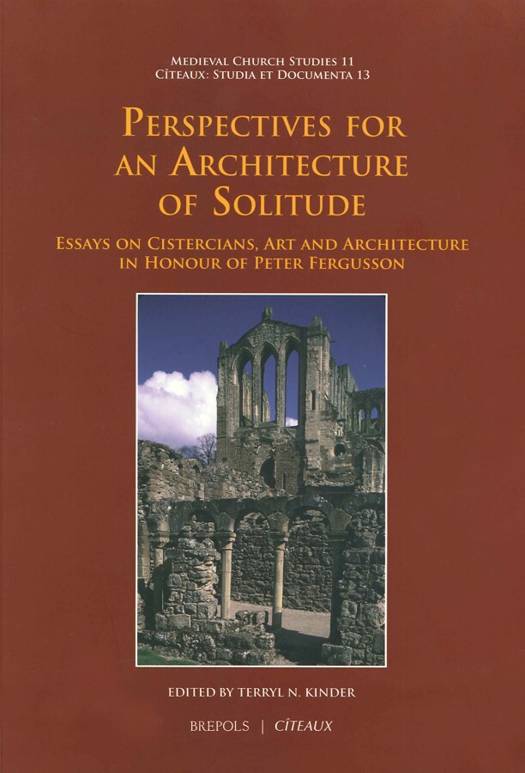
Perspectives for an Architecture of Solitude
Essays on Cistercians, Art and Architecture in Honour of Peter Fergusson
Terryl Kinder
79,50 €
+ 159 points
Description
What was it that gave medieval art and architecture its form and style? What is it that attracts people to medieval art and architecture, especially that of the Cistercians? What shaped medieval buildings and determined their embellishments--and what now determines the way we look at them? Some of the most intriguing questions in monastic and ecclesiastical architecture and archaeology are discussed in this tribute to Peter Fergusson and his lifetime of scholarship as an historian of medieval art and architecture, especially of the Cistercians. These thirty-four essays range from a discussion of the earliest Christian legislation on art (fourth century) to an account of a garden project of 1811 designed to efface all previous monastic habitation. Between these chronological signposts are studies on the design, siting, building, and archaeology of churches, infirmaries, abbots' lodgings, gatehouses, private chambers, grange chapels, and the life lived within and around them. Geographically, the papers range from the British Isles through Spain, France, Flanders, and Germany to the centre of the medieval world: Jerusalem. They treat of the complexities of building and re-building; of architectural and artistic adaptations to place, period, and political upheaval; of the interrelationship of text and structure; and of the form, iconography, and influence of some of the great cathedrals and churches of the Middle Ages. This is a wide-ranging and authoritative collection of studies which is essential reading for any historian of medieval -- especially Cistercian -- art and architecture.
Spécifications
Parties prenantes
- Auteur(s) :
- Editeur:
Contenu
- Nombre de pages :
- 460
- Langue:
- Anglais
- Collection :
- Tome:
- n° 11
Caractéristiques
- EAN:
- 9782503516929
- Date de parution :
- 25-11-04
- Format:
- Livre broché
- Format numérique:
- Trade paperback (VS)
- Dimensions :
- 213 mm x 297 mm
- Poids :
- 1256 g


Seulement chez Librairie Club
+ 159 points sur votre carte client de Librairie Club
Cadeau


Les avis
Nous publions uniquement les avis qui respectent les conditions requises. Consultez nos conditions pour les avis.