


- Retrait en 2 heures
- Assortiment impressionnant
- Paiement sécurisé
- Toujours un magasin près de chez vous
- Retrait en 2 heures
- Assortiment impressionnant
- Paiement sécurisé
- Toujours un magasin près de chez vous



203,95 €
+ 407 points
Description
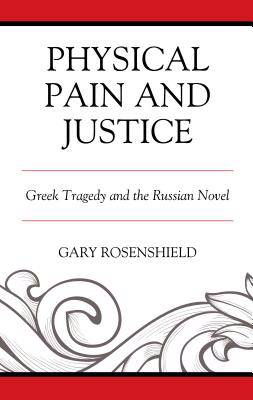
It has been said that all great literature is about suffering. But before the twentieth century, physical pain, one of the most primal forms of human suffering, has rarely been represented on the stage and in fiction. But when it is foregrounded in works of literature, it is not only the most dramatic way of representing human suffering, it is also used to explore, in the most intense form, existential questions regarding the meaning of human existence and the justice of the universe. Perhaps it is not entirely coincidental, then, that imaginative works about physical pain, though few in number, figure prominently among the masterpieces of the western literary tradition. The best were written during two of the west's most astonishing periods of literary creativity, fifth-century-BC Athens and nineteenth-century Russia, and by the most prominent artists of their time: Prometheus Bound by Aeschylus, The Women of Trachis and Philoctetes by Sophocles; Notes from the House of the Dead by Dostoevsky; and The Death of Ivan Ilyich and War and Peace by Tolstoy. In all these works, physical pain is always portrayed as a dynamic process that includes the view point of the victim, the perpetrator (much of the physical pain is in the form of torture), and the onlooker or witness. In the Greek works, physical pain is the main vehicle for exposing the injustice of the gods and the world order, and in the Russian works for questioning the moral legitimacy of the state. In Prometheus Bound, Zeus delegitimizes his rule by torturing Prometheus for his service to mankind. In The Women of Trachis, the gods look indifferently upon the excruciating suffering of Hercules, the greatest Greek hero. In Philoctetes, the gods cruelly exploit the terrible pain of the hero as a means of winning victory at Troy for their Greek wards. In the Russian works, the mechanisms for inflicting the maximum amount of physical pain during corporal punishment undermine the moral foundations of the state and argue for its dissolution. Though the Greek and Russian works are separated by genre (plays vs novels) and by time (over two thousand years), they are united by the way they employ pain to investigate the justice--or rather injustice--of the world order.
Spécifications
Parties prenantes
- Auteur(s) :
- Editeur:
Contenu
- Nombre de pages :
- 216
- Langue:
- Anglais
- Collection :
Caractéristiques
- EAN:
- 9781498568456
- Date de parution :
- 04-10-17
- Format:
- Livre relié
- Format numérique:
- Genaaid
- Dimensions :
- 155 mm x 231 mm
- Poids :
- 476 g


Seulement chez Librairie Club
+ 407 points sur votre carte client de Librairie Club
Cadeau


Les avis
Nous publions uniquement les avis qui respectent les conditions requises. Consultez nos conditions pour les avis.