Club utilise des cookies et des technologies similaires pour faire fonctionner correctement le site web et vous fournir une meilleure expérience de navigation.
Ci-dessous vous pouvez choisir quels cookies vous souhaitez modifier :
Club utilise des cookies et des technologies similaires pour faire fonctionner correctement le site web et vous fournir une meilleure expérience de navigation.
Nous utilisons des cookies dans le but suivant :
Assurer le bon fonctionnement du site web, améliorer la sécurité et prévenir la fraude
Avoir un aperçu de l'utilisation du site web, afin d'améliorer son contenu et ses fonctionnalités
Pouvoir vous montrer les publicités les plus pertinentes sur des plateformes externes
Club utilise des cookies et des technologies similaires pour faire fonctionner correctement le site web et vous fournir une meilleure expérience de navigation.
Ci-dessous vous pouvez choisir quels cookies vous souhaitez modifier :
Cookies techniques et fonctionnels
Ces cookies sont indispensables au bon fonctionnement du site internet et vous permettent par exemple de vous connecter. Vous ne pouvez pas désactiver ces cookies.
Cookies analytiques
Ces cookies collectent des informations anonymes sur l'utilisation de notre site web. De cette façon, nous pouvons mieux adapter le site web aux besoins des utilisateurs.
Cookies marketing
Ces cookies partagent votre comportement sur notre site web avec des parties externes, afin que vous puissiez voir des publicités plus pertinentes de Club sur des plateformes externes.
Une erreur est survenue, veuillez réessayer plus tard.
Il y a trop d’articles dans votre panier
Vous pouvez encoder maximum 250 articles dans votre panier en une fois. Supprimez certains articles de votre panier ou divisez votre commande en plusieurs commandes.
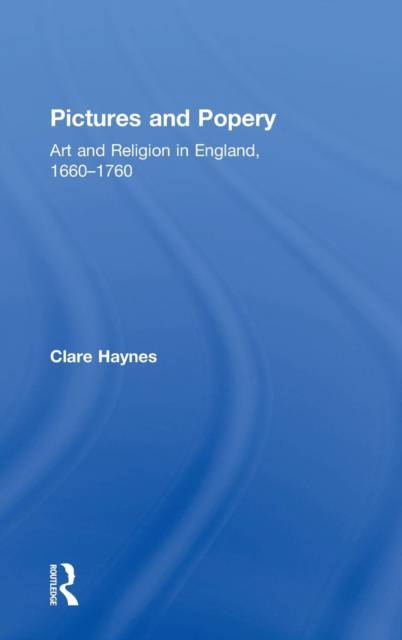
The part religion played in questions of national identity in early modern England is a familiar historical theme, yet little work has been done on how this worked culturally. Nowhere is this more visible than in the seeming contradiction of a militantly Protestant nation such as England, that had a high regard for Catholic art. It is this dichotomy, the tensions between art and anti-Catholicism, that forms the central investigation of this book. During the late seventeenth and eighteenth century, religious art was closely identified with idolatry, and the use of images was one of the most obvious markers of the boundary between Protestantism and Catholicism. This manifested itself in an unease about the status of the religious image in English society, which was articulated in religious tracts, anti-Catholic propaganda, polemical debate, court cases and numerous other places. In light of these attacks upon 'idolatry', the fact that a great deal of Catholic art was so highly regarded and sought after seems puzzling. By discussing English attitudes towards the works of Italian painters (including Raphael, Michelangelo and Domenichino) and the ways in which native artists sought appropriately Protestant ways of emulating them, this volume offers a fascinating perspective on the dichotomy that existed between English appreciation and disapproval of Catholic culture. By taking this cultural and artistic approach and applying it to the broader historical themes, a new and invigorating way of understanding religion and national identity is offered.