


- Retrait en 2 heures
- Assortiment impressionnant
- Paiement sécurisé
- Toujours un magasin près de chez vous
- Retrait en 2 heures
- Assortiment impressionnant
- Paiement sécurisé
- Toujours un magasin près de chez vous



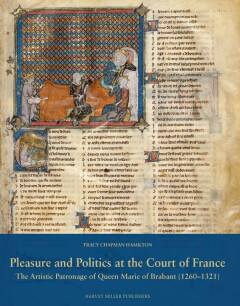
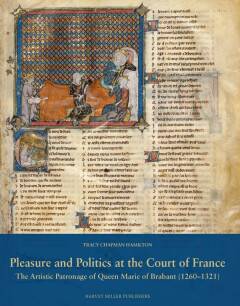
Pleasure and Politics at the Court of France
The Artistic Patronage of Queen Marie of Brabant (1260-1321)
Tracy Hamilton
148,40 €
+ 296 points
Description
For her commissioning and performance of a French vernacular version of the Arabic Tale of the Thousand and One Nights - recorded in one of the most vivid and sumptuous extant late thirteenth-century manuscripts - as well as for her numerous other commissions, Queen Marie de Brabant (1260-1321) was heralded as an intellectual and literary patron comparable to Alexander the Great and Charlemagne. Nevertheless, classic studies of the late medieval period understate Marie's connection to the contemporary rise of secular interests at the French court. Pleasure and Politics seeks to reshape that conversation by illustrating how the historical and material record reveals the queens essential contributions to the burgeoning court. This emerging importance of the secular and redefinition of the sacred during the last decades of Capetian rule becomes all the more striking when juxtaposed to the pious tone of the lengthy reign of Louis IX (1214-1270), which had ended just four years before Maries marriage to his son. That Marie often chose innovative materials and iconographies for these objects ones that would later in the fourteenth century become the norm signals her impact on late medieval patronage. Pleasure and Politics examines Marie's life beginning with her youth in Brabant, to her entry into Paris in 1274 accompanied by her retinue of courtiers, artists, objects, and ideas from the northern courts of Brabant, Flanders, and Artois. It continues with her elaborate coronation held for the first time in the Sainte-Chapelle the following year, her years as queen of France - often full of intrigue - and her long, productive widowhood, until her death and burial in 1321. With a focus on her Brabantine and Carolingian heritage joined to her status as French queen - often expressed through pioneering styles of heraldry - her commissions included ceremonies, marriage treaties, and intercessions, as well as a stunning collection of jewels, seals, manuscripts, reliquaries, sculpture, stained glass, and architecture that she gathered and built around her. This study also reveals Marie's regular collaboration with family, friends, and artists, in particular that with the poet Adenet le Roi, women of the French court like Blanche of France (1252-1320), and relatives from the north like Robert of Artois (1250-1302). With this broader view, it also analyzes the dynamics of Marie's patronage and its impact on contemporary and future women and men of the royal house. Court, culture, politics, and gender - these are the themes that flow throughout Marie of Brabant's life and tie together the material effects of a long, pleasure-filled existence enlivened by the politics of Europe on the cusp of a new age.
Spécifications
Parties prenantes
- Auteur(s) :
- Editeur:
Contenu
- Nombre de pages :
- 328
- Langue:
- Anglais
- Collection :
- Tome:
- n° 64
Caractéristiques
- EAN:
- 9781905375684
- Date de parution :
- 31-05-18
- Format:
- Livre relié
- Format numérique:
- Genaaid
- Poids :
- 1700 g


Seulement chez Librairie Club
+ 296 points sur votre carte client de Librairie Club
Cadeau


Les avis
Nous publions uniquement les avis qui respectent les conditions requises. Consultez nos conditions pour les avis.