


- Retrait en 2 heures
- Assortiment impressionnant
- Paiement sécurisé
- Toujours un magasin près de chez vous
- Retrait en 2 heures
- Assortiment impressionnant
- Paiement sécurisé
- Toujours un magasin près de chez vous



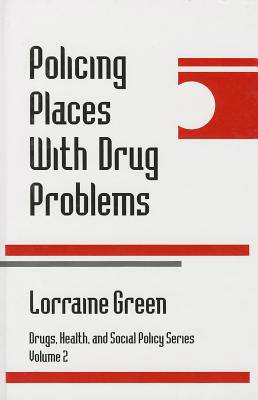
Policing Places With Drug Problems
Lorraine A Green Mazerolle
303,95 €
+ 607 points
Description
This valuable study integrates concepts from environmental criminology and problem-oriented policing in a rigorous evaluation of civil remedies used to inhibit drug dealing. --Ronald V. Clarke, Dean, School of Criminal Justice, Rutgers University "Policing Places with Drug Problems is well-written, current, and interesting. In particular, it is by far the best description that I have read on the topic of ′place-oriented′ strategies of crime control. The integration of the literature on different strategies is outstanding. The book will make an important contribution to the field. Police officers and administrators as well as academics, researchers, and policymakers will find the literature review and research interesting and informative." --Doris L. MacKenzie, University of Maryland at College Park "SMART inspections began as an innovative search for alternative ways to solve community problems. This book captures the essence of the program, its positive results, and raises issues about the future of police problem-solving efforts." --Bob Crawford, Founder, Beat Health Unit, Oakland Police Department "In Policing Places with Drug Problems, Lorraine Green has paid close attention to the lessons of the new criminology of crime prevention. Her methods are cautious and thoughtful, and tailor-made to the substantive problems she examines. This is one of the first major criminal justice evaluations to rely heavily on computer mapping technologies. Accordingly, Green draws from a broad array of data but links them to the places where the interventions are practiced. Her conclusions hold particular weight because she has selected a case study that provides a clear and powerful test of the crime prevention components that it employs. . . . This is an important book with significant research and policy implications. Its message about policing is one that should be heard by both scholars and policymakers. It provides us with not only guidance from a successful case study but also new and important evidence about the ability of criminal justice agents to do something about crime." --from the Foreword by David Weisburd, The Hebrew University, Jerusalem Timely and informative, Policing Places with Drug Problems focuses on the success of nontraditional, place-oriented drug control strategies in cities across the nation. In her perceptive case study, author Lorraine Green examines SMART (Specialized Multi-Agency Response Team), a program developed by an innovative police practitioner, Sergeant Bob Crawford of the Oakland Police Department. As an alternative to arrest-oriented strategies, SMART engages active enforcement of civil codes and regulatory rules to clean up drug centers, encouraging citizens, landlords, and business owners to work with police in a community effort at drug abatement. In her careful analysis, the author studies the extent to which deviant places can be changed as well as the implications of implementing nontraditional, street-level drug control strategies. A new contribution to policing innovation, this volume concludes with a thoughtful discussion of the challenges that face cities developing alternative drug policing programs. An excellent resource, Policing Places with Drug Problems provides a must-read analysis of place-oriented drug control strategies of particular interest to researchers, practitioners, policymakers, academics and students in criminology, criminal law, policing, urban studies, and social work.
Spécifications
Parties prenantes
- Auteur(s) :
- Editeur:
Contenu
- Nombre de pages :
- 160
- Langue:
- Anglais
- Collection :
- Tome:
- n° 2
Caractéristiques
- EAN:
- 9780803970182
- Date de parution :
- 26-12-95
- Format:
- Livre relié
- Format numérique:
- Genaaid
- Dimensions :
- 157 mm x 229 mm
- Poids :
- 430 g


Seulement chez Librairie Club
+ 607 points sur votre carte client de Librairie Club
Cadeau


Les avis
Nous publions uniquement les avis qui respectent les conditions requises. Consultez nos conditions pour les avis.