


- Retrait en 2 heures
- Assortiment impressionnant
- Paiement sécurisé
- Toujours un magasin près de chez vous
- Retrait gratuit dans votre magasin Club
- 7.000.0000 titres dans notre catalogue
- Payer en toute sécurité
- Toujours un magasin près de chez vous



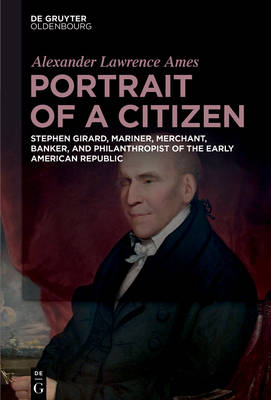
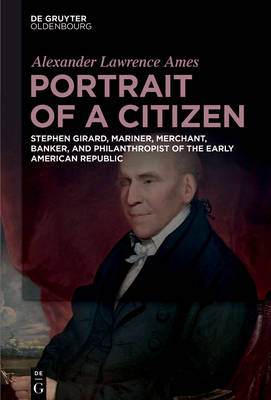
Portrait of a Citizen
Stephen Girard, Mariner, Merchant, Banker, and Philanthropist of the Early American Republic
Alexander Lawrence Ames
Livre relié | Anglais
89,45 €
+ 178 points
Description
The émigré merchant Stephen Girard of Philadelphia (1750-1831) embodied many of the values associated with the revolutionary American republic he chose to call home. After haphazardly arriving in Philadelphia in 1776, the Frenchman benefited mightily from the economic opportunities of his volatile era. As he entered maturity, the merchant-banker found meaning through civic leadership and his famous last will and testament, in which he codified his approach to national progress through civic works. Studying Girard's philosophy of engaged citizenship illuminates the cultural forces at work in the early United States. Girard also bequeathed to posterity an enormous cache of archival records, a substantial library, a diverse collection of fine and decorative art, as well as an intriguing assemblage of material culture related to the careers of his "Philosopher Ships," named for his favored authors. This collection creates a rare opportunity to conjure the world inhabited by Girard and his intimates, including his wife Mary Lum Girard, his enslaved woman Hannah, female relations of mixed racial backgrounds, unmarried intimate partners, and business associates. Making use of this remarkable, and underexplored, collection allows Girard's story to transcend an individual's life, shedding light on economy, society, civic culture, labor, family relationships, and global politics at a pivotal moment in history. Portrait of a Citizen is the first modern scholarly study to link the material relics of Girard's life to the history of his heavily litigated will, culminating in the U.S. Civil Rights Movement of the 1960s. By viewing Girard's life, works, and memory across the centuries, the book poses persistent and pressing questions about civic belonging in the United States.
Spécifications
Parties prenantes
- Auteur(s) :
- Editeur:
Contenu
- Nombre de pages :
- 242
- Langue:
- Anglais
Caractéristiques
- EAN:
- 9783110998092
- Date de parution :
- 02-02-26
- Format:
- Livre relié
- Format numérique:
- Genaaid
- Dimensions :
- 156 mm x 234 mm
- Poids :
- 517 g


Seulement chez Librairie Club
+ 178 points sur votre carte client de Librairie Club
Cadeau

Cadeau


Les avis
Nous publions uniquement les avis qui respectent les conditions requises. Consultez nos conditions pour les avis.