


- Retrait en 2 heures
- Assortiment impressionnant
- Paiement sécurisé
- Toujours un magasin près de chez vous
- Retrait en 2 heures
- Assortiment impressionnant
- Paiement sécurisé
- Toujours un magasin près de chez vous



111,95 €
+ 223 points
Description
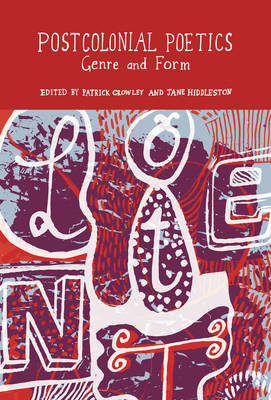
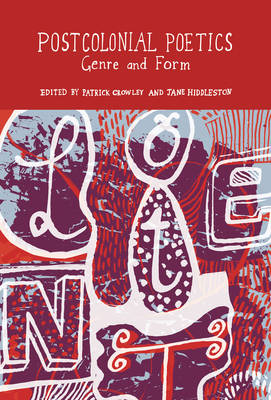
Postcolonial literature has often tended to invite readings that focus on the relation between texts and political contexts, not surprisingly perhaps, given the fraught historical moments of colonialism and decolonisation with which it frequently engages. Nevertheless, critics such as Nicholas Harrison have argued for attention to the literary as literary, and have explored the ways in which literary representation makes any assumed ideological content necessarily indeterminate. Taking into account this call for attention to the literary, this volume investigates more specifically the idiosyncrasies of postcolonial poetics, including postcolonial literature's use of and experimentation with genre and form. However, this attention to poetics is not intended to replace political engagement, and, rather than privileging the literary at the expense of the political, this volume analyses how texts use genre and form to offer multiple distinct ways of responding to political and historical questions. Postcolonial texts engage with the political world in a variety of ways, directly or indirectly, and it is in their specific uses of genre and form that they alter or develop our understanding of the particular contexts with which they grapple. According to Graham Huggan, postcolonial studies is inherently plural and interdisciplinary, in that it is made up of literary and cultural analysis as well as political theory, psychoanalysis, anthropology, history and philosophy. It is in the combination and manipulation of such forms of analysis that postcolonialism is able to imagine alternative identities and societies. This volume of postcolonial poetics therefore probes some examples of different kinds of literary writing, its blurring with other discourses and its manipulation of genre and form, in order to achieve a better understanding of its transformatory power.This exploration of the poetics of genre also sheds light on how different kinds of texts offer specific, distinct modes of thought.
Spécifications
Parties prenantes
- Editeur:
Contenu
- Nombre de pages :
- 279
- Langue:
- Anglais
- Collection :
- Tome:
- n° 2
Caractéristiques
- EAN:
- 9781846317453
- Date de parution :
- 16-11-11
- Format:
- Livre relié
- Format numérique:
- Genaaid
- Dimensions :
- 155 mm x 236 mm
- Poids :
- 680 g

Seulement chez Librairie Club
+ 223 points sur votre carte client de Librairie Club
Cadeau


Les avis
Nous publions uniquement les avis qui respectent les conditions requises. Consultez nos conditions pour les avis.