


- Retrait en 2 heures
- Assortiment impressionnant
- Paiement sécurisé
- Toujours un magasin près de chez vous
- Retrait en 2 heures
- Assortiment impressionnant
- Paiement sécurisé
- Toujours un magasin près de chez vous



63,45 €
+ 126 points
Description
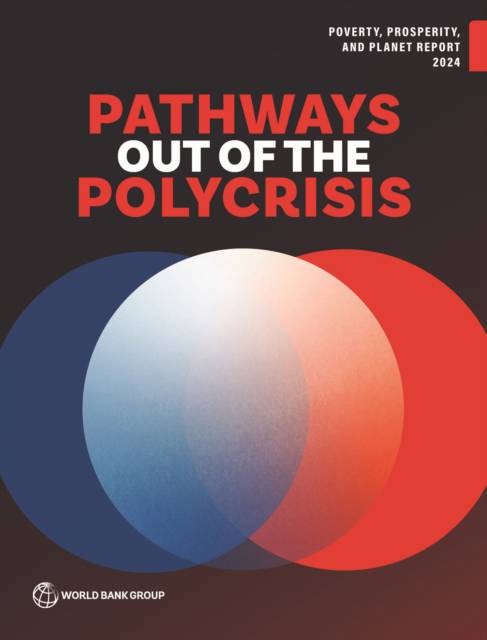
The Poverty, Prosperity, and Planet Report 2024 is the latest edition of the series formerly known as Poverty and Shared Prosperity. The report emphasizes that reducing poverty and increasing shared prosperity must be achieved in ways that do not come at unacceptably high costs to the environment. The current "polycrisis"--where the multiple crises of slow economic growth, increased fragility, climate risks, and heightened uncertainty have come together at the same time--makes national development strategies and international cooperation difficult. Offering the first post-Coronavirus (COVID)-19 pandemic assessment of global progress on this interlinked agenda, the report finds that global poverty reduction has resumed but at a pace slower than before the COVID-19 crisis. Nearly 700 million people worldwide live in extreme poverty with less than US$2.15 per person per day. Progress has essentially plateaued amid lower economic growth and the impacts of COVID-19 and other crises. Today, extreme poverty is concentrated mostly in Sub-Saharan Africa and fragile settings. At a higher standard more typical of upper-middle-income countries--US$6.85 per person per day--almost one-half of the world is living in poverty. The report also provides evidence that the number of countries that have high levels of income inequality has declined considerably during the past two decades, but the pace of improvements in shared prosperity has slowed, and that inequality remains high in Latin America and the Caribbean and Sub-Saharan Africa. Worldwide, people's incomes today would need to increase fivefold on average to reach a minimum prosperity threshold of US$25 per person per day. Where there has been progress in poverty reduction and shared prosperity, there is evidence of an increasing ability of countries to manage natural hazards, but climate risks are significantly higher in the poorest settings. Nearly one in five people globally is at risk of experiencing welfare losses due to an extreme weather event from which they will struggle to recover. The interconnected issues of climate change and poverty call for a united and inclusive effort from the global community. Development cooperation stakeholders--from governments, nongovernmental organizations, and the private sector to communities and citizens acting locally in every corner of the globe--hold pivotal roles in promoting fair and sustainable transitions. By emphasizing strategies that yield multiple benefits and diligently monitoring and addressing trade-offs, we can strive toward a future that is prosperous, equitable, and resilient.
Spécifications
Parties prenantes
- Auteur(s) :
- Editeur:
Contenu
- Nombre de pages :
- 296
- Langue:
- Anglais
- Collection :
Caractéristiques
- EAN:
- 9781464821233
- Date de parution :
- 30-12-24
- Format:
- Livre broché
- Format numérique:
- Trade paperback (VS)
- Dimensions :
- 203 mm x 264 mm
- Poids :
- 766 g


Seulement chez Librairie Club
+ 126 points sur votre carte client de Librairie Club
Cadeau


Les avis
Nous publions uniquement les avis qui respectent les conditions requises. Consultez nos conditions pour les avis.