


En raison d'une grève chez bpost, des retards de livraison peuvent survenir. Besoin de quelque chose en urgence ? Optez pour un retrait en magasin ou rendez-vous dans une Librairie Club à proximité.
- Retrait en 2 heures
- Assortiment impressionnant
- Paiement sécurisé
- Toujours un magasin près de chez vous
En raison d'une grève chez bpost, des retards de livraison peuvent survenir. Besoin de quelque chose en urgence ? Optez pour un retrait en magasin ou rendez-vous dans une Librairie Club à proximité.
- Retrait en 2 heures
- Assortiment impressionnant
- Paiement sécurisé
- Toujours un magasin près de chez vous



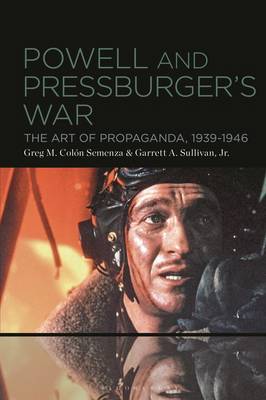
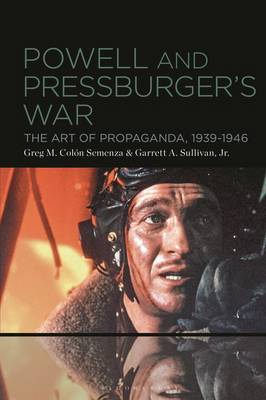
Powell and Pressburger's War
The Art of Propaganda, 1939-1946
Greg M Colón Semenza, Garrett A Sullivan Jr
Livre relié | Anglais
220,45 €
+ 440 points
Description
A focused study on Michael Powell and Emeric Pressburger's cinematic contributions to the war effort, arguing for the centrality of propaganda to their work as film artists.
Michael Powell and Emeric Pressburger are widely hailed as two of the greatest filmmakers in British cinema history. The release of their first movie, The Spy in Black, barely preceded the beginning of World War Two, and a number of their early masterworks, including The Life and Death of Colonel Blimp, A Canterbury Tale, and A Matter of Life and Death, were produced in the service of the war effort. Through exploring the relationship between art and propaganda, this book shows that Powell and Pressburger saw no contradiction between their aesthetic ambitions and their cinematic war work: propaganda imperatives were highly conducive to their objectives as both commercial cinema practitioners and artists. Drawing on production materials from the archives of the British Film Institute, this book charts three phases in Powell and Pressburger's wartime career: from first-time collaborators who strive to reconcile popular cinematic forms with developing notions of what constitutes effective propaganda; to accomplished, and sometimes controversial, propagandists whose movies center upon Britain's relations with its enemies and allies; to filmmakers whose responsiveness to the propaganda requirements of the late war is matched by a focus, shared by the Ministry of Information, on what the post-war future would bring.Spécifications
Parties prenantes
- Auteur(s) :
- Editeur:
Contenu
- Nombre de pages :
- 288
- Langue:
- Anglais
Caractéristiques
- EAN:
- 9798765105733
- Date de parution :
- 19-10-23
- Format:
- Livre relié
- Format numérique:
- Genaaid
- Dimensions :
- 152 mm x 229 mm
- Poids :
- 544 g


Seulement chez Librairie Club
+ 440 points sur votre carte client de Librairie Club
Cadeau


Les avis
Nous publions uniquement les avis qui respectent les conditions requises. Consultez nos conditions pour les avis.