


- Retrait en 2 heures
- Assortiment impressionnant
- Paiement sécurisé
- Toujours un magasin près de chez vous
- Retrait en 2 heures
- Assortiment impressionnant
- Paiement sécurisé
- Toujours un magasin près de chez vous



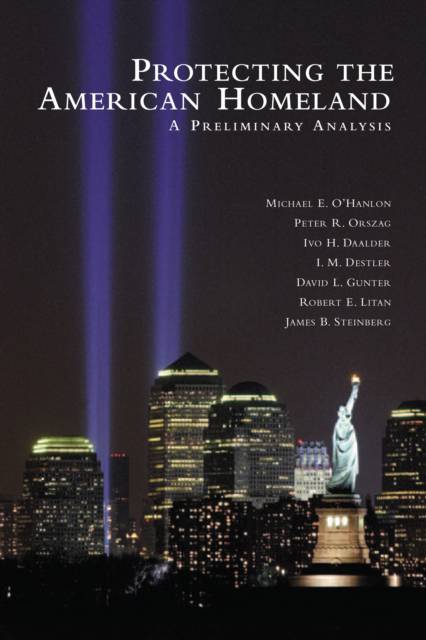
Protecting the American Homeland
One Year on
Michael E O'Hanlon, Peter R Orszag, Ivo H Daalder
Livre broché | Anglais
44,45 €
+ 88 points
Description
A good deal has been done to improve the safety of Americans on their own soil since the attacks of September 11, 2001. Yet there have been numerous setbacks. The Bush administration and Congress wasted at least six months in 2002 due to partisan disagreement over a new budget for homeland security, and as one consequence, resources were slow to reach first responders across the country. Most improvements in homeland security have focused on ""refighting the last war""--improving defenses against attacks similar to those the country has already suffered. Not enough has been done to anticipate possible new kinds of terrorist actions. Policymakers have also focused too much attention on the creation of a department of homeland security--rather than identifying and addressing the kinds of threats to which the country remains vulnerable. While the creation of a cabinet-level agency focusing on homeland security may have merit, the authors of this study argue that the department will not, in and of itself, make Americans safer. To the contrary, the complexity of merging so many disparate agencies threatens to distract Congress and the administration from other, more urgent security efforts. This second edition of Protecting the American Homeland urges policymakers to focus on filling key gaps that remain in the current homeland security effort: identifying better protection for private infrastructure; using information technology to share intelligence and more effectively ""connect the dots"" that could hold hints to possible terrorist tactics; expanding the capacities of the Coast Guard and Customs Service, as well as airline transportation security; dealing with the possible threat of surface-to-air missiles to airliners; and encouraging better coordination among intelligence agencies. While acknowledging the impossibility of preventing every possible type of terrorist violence, the authors recommend a more systematic approach to homeland security that focuses on preventing attacks that can cause large numbers of casualties, massive economic or societal disruption, or severe political harm to the nation.
Spécifications
Parties prenantes
- Auteur(s) :
- Editeur:
Contenu
- Nombre de pages :
- 232
- Langue:
- Anglais
Caractéristiques
- EAN:
- 9780815764533
- Date de parution :
- 14-04-03
- Format:
- Livre broché
- Format numérique:
- Trade paperback (VS)
- Dimensions :
- 156 mm x 230 mm
- Poids :
- 322 g



Seulement chez Librairie Club
+ 88 points sur votre carte client de Librairie Club
Cadeau


Les avis
Nous publions uniquement les avis qui respectent les conditions requises. Consultez nos conditions pour les avis.