


- Retrait en 2 heures
- Assortiment impressionnant
- Paiement sécurisé
- Toujours un magasin près de chez vous
- Retrait en 2 heures
- Assortiment impressionnant
- Paiement sécurisé
- Toujours un magasin près de chez vous



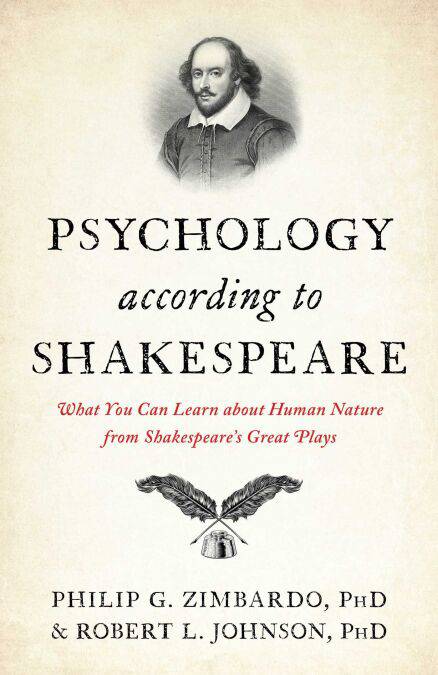
Psychology According to Shakespeare EBOOK
What You Can Learn about Human Nature from Shakespeare's Great Plays
Philip G. Zimbardo, Robert L. Johnson
Ebook | Anglais
21,24 €
+ 21 points
Description
William Shakespeare has undergone psychological analyses ever since Freud diagnosed Hamlet with an Oedipus complex. But now, two psychologists propose to turn the tables by telling how Shakespeare himself understood human behavior and the innermost workings of the human mind. Psychology According to Shakespeare: What You Can Learn About Human Nature From Shakespeare's Great Plays, is an interdisciplinary project that bridges psychological science and literature, bringing together for the first time in one volume, the breadth and depth of The Bard’s knowledge of love, jealousy, dreams, betrayal, revenge, and the lust for power and position.
Even today, there is no better depiction of a psychopath than Richard III, no more poignant portrayal of dementia than King Lear, nor a more unforgettable illustration of obsessive-compulsive disorder than Lady Macbeth’s attempts to wash away the damned blood spot. What has not been revealed before, however, are the many different forms of mental illness The Bard described in terms that are now identifiable in the modern manual of disorders known as the DSM-5.
But, as the book shows, the playwright’s fascination with human nature extended far beyond mental disorders, ranging across the psychological spectrum, from brain anatomy to personality, cognition, emotion, perception, lifespan development, and states of consciousness. To illustrate, we have stories to tell involving astrology, potions, poisons, the four fluids called “humors,” anatomical dissections of freshly hanged criminals, and a mental hospital called Bedlam—all showing how his perspective was grounded in the medicine and culture of his time.
Yet, Will Shakespeare’s intellect, curiosity, and temperament allowed him to see other ideas and issues that would become important in psychological science centuries later. Many of these connections between Shakespeare and psychology lie scattered in books, articles, and web pages across the public domain, but they have never been brought together into a single volume. So, here the authors retell of his fashioning the felicitous phrase, nature-nurture for Prospero to utter in frustration with Caliban and of how the nature-nurture dichotomy would become central in psychology’s quest to understand the tension between heredity and environment. But that was still far from all, for they discovered that his work anticipated multiple other psychological tensions. For example, in Measure for Measure, he made audiences puzzle over which exerts the greater influence on human behavior: internal traits or the external situation. And in Hamlet, he explored the equally enigmatic push-pull between reason and emotion in the mind of the dithering prince.
Aside from bringing together The Bard’s known psychology, the book is unique in several other respects. It reveals how his interest in mind and behavior ranged across the full spectrum of psychology, including topics that we now call biopsychology and neuroscience, social psychology, thinking and intelligence, motivation and emotion, and reason vs intuition. Further, we show how the psychological concepts he used have evolved over the intervening centuries—for example, the Elizabethan notion of sensus communis eventually became “consciousness” and the old idea of the humors morphed into our current understanding of hormones and neurotransmitters. We also note that some of Mr. Shakespeare’s concerns seem especially timely today, as in the subplot of queer vs straight issues complicating the story of Troilus and Cressida and in Shylock’s telling of prejudices inflicted on ethnic minorities.
Even today, there is no better depiction of a psychopath than Richard III, no more poignant portrayal of dementia than King Lear, nor a more unforgettable illustration of obsessive-compulsive disorder than Lady Macbeth’s attempts to wash away the damned blood spot. What has not been revealed before, however, are the many different forms of mental illness The Bard described in terms that are now identifiable in the modern manual of disorders known as the DSM-5.
But, as the book shows, the playwright’s fascination with human nature extended far beyond mental disorders, ranging across the psychological spectrum, from brain anatomy to personality, cognition, emotion, perception, lifespan development, and states of consciousness. To illustrate, we have stories to tell involving astrology, potions, poisons, the four fluids called “humors,” anatomical dissections of freshly hanged criminals, and a mental hospital called Bedlam—all showing how his perspective was grounded in the medicine and culture of his time.
Yet, Will Shakespeare’s intellect, curiosity, and temperament allowed him to see other ideas and issues that would become important in psychological science centuries later. Many of these connections between Shakespeare and psychology lie scattered in books, articles, and web pages across the public domain, but they have never been brought together into a single volume. So, here the authors retell of his fashioning the felicitous phrase, nature-nurture for Prospero to utter in frustration with Caliban and of how the nature-nurture dichotomy would become central in psychology’s quest to understand the tension between heredity and environment. But that was still far from all, for they discovered that his work anticipated multiple other psychological tensions. For example, in Measure for Measure, he made audiences puzzle over which exerts the greater influence on human behavior: internal traits or the external situation. And in Hamlet, he explored the equally enigmatic push-pull between reason and emotion in the mind of the dithering prince.
Aside from bringing together The Bard’s known psychology, the book is unique in several other respects. It reveals how his interest in mind and behavior ranged across the full spectrum of psychology, including topics that we now call biopsychology and neuroscience, social psychology, thinking and intelligence, motivation and emotion, and reason vs intuition. Further, we show how the psychological concepts he used have evolved over the intervening centuries—for example, the Elizabethan notion of sensus communis eventually became “consciousness” and the old idea of the humors morphed into our current understanding of hormones and neurotransmitters. We also note that some of Mr. Shakespeare’s concerns seem especially timely today, as in the subplot of queer vs straight issues complicating the story of Troilus and Cressida and in Shylock’s telling of prejudices inflicted on ethnic minorities.
Spécifications
Parties prenantes
- Auteur(s) :
- Editeur:
Contenu
- Nombre de pages :
- 344
- Langue:
- Anglais
Caractéristiques
- EAN:
- 9781633889613
- Date de parution :
- 17-06-24
- Format:
- Ebook
- Protection digitale:
- Adobe DRM
- Format numérique:
- ePub


Seulement chez Librairie Club
+ 21 points sur votre carte client de Librairie Club
Cadeau


Les avis
Nous publions uniquement les avis qui respectent les conditions requises. Consultez nos conditions pour les avis.