


- Retrait en 2 heures
- Assortiment impressionnant
- Paiement sécurisé
- Toujours un magasin près de chez vous
- Retrait en 2 heures
- Assortiment impressionnant
- Paiement sécurisé
- Toujours un magasin près de chez vous



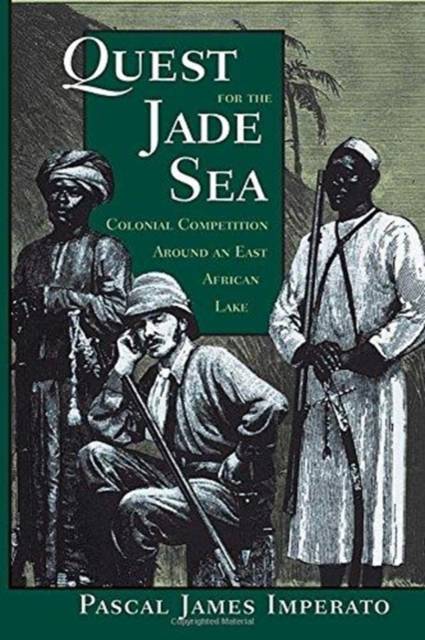
Quest for the Jade Sea
Colonial Competition Around an East African Lake
Pascal James Imperato
Livre broché | Anglais
102,45 €
+ 204 points
Format
Description
The last of the major African lakes to be visited by European travelers in the late nineteenth century, Lake Rudolf lies in the eastern arm of the great Rift Valley in present-day northern Kenya, near the Ethiopian border. Also known as Lake Turkana, Lake Rudolf is a large saltwater body two hundred miles long and forty miles wide. Fed by the Omo River that flows south from the Ethiopian highlands, it is surrounded by an inhospitable landscape of extinct volcanoes, wind-driven semidesert, and old lava flows. Because of the greenish hue of its waters, it has long been called the Jade Sea.Quest for the Jade Sea examines the fascinating story of colonial competition around this remote lake. Pascal James Imperato's account yields important insights into European colonial policies in East Africa in the late nineteenth century and how these policies came into conflict with a powerful indigenous and independent African state, Ethiopia, which itself was engaged in imperial expansion.Although the chief competitors for the lake included the British, Italians, the French, Russians, and Ethiopians, its colonial fate was decided by Great Britain and Ethiopia. The role of Ethiopia as a late nineteenth-century colonial power unfolds as Imperato provides unique insights and analyses of Ethiopian colonial policy and its effects on the peoples who inhabited the region of the lake.As well as examining the political and diplomatic aspects of colonial competition for Lake Rudolf, Quest for the Jade Sea focuses on the expeditions that traveled there. Many of these were the field expressions of colonial policy; others were undertaken in the interest of scientific and geographical discovery. Whatever the impetus, their success required courage and much suffering on the part of those who led them. Whether as willing agents of larger colonial designs, soldiers intent on promoting their military careers, or explorers who wished to advance scientific knowledge, expedition leaders left behind not only fascinating chronicles of their experiences and discoveries but also parts of the larger story of colonial competition around an East African lake.
Spécifications
Parties prenantes
- Auteur(s) :
- Editeur:
Contenu
- Nombre de pages :
- 362
- Langue:
- Anglais
Caractéristiques
- EAN:
- 9780813327921
- Date de parution :
- 05-01-01
- Format:
- Livre broché
- Format numérique:
- Trade paperback (VS)
- Dimensions :
- 152 mm x 229 mm
- Poids :
- 485 g


Seulement chez Librairie Club
+ 204 points sur votre carte client de Librairie Club
Cadeau


Les avis
Nous publions uniquement les avis qui respectent les conditions requises. Consultez nos conditions pour les avis.