


- Retrait en 2 heures
- Assortiment impressionnant
- Paiement sécurisé
- Toujours un magasin près de chez vous
- Retrait en 2 heures
- Assortiment impressionnant
- Paiement sécurisé
- Toujours un magasin près de chez vous



4,49 €
+ 4 points
Description
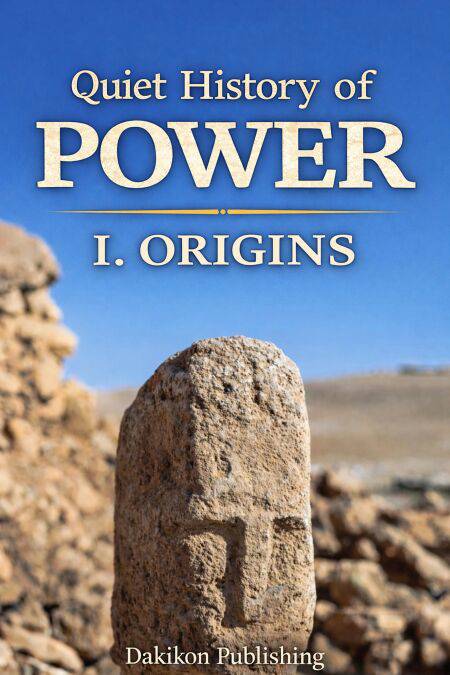
I. Origins — A Quiet History of Power
Long before Rome, long before Greece, power already had a shape.
In the river valleys of Mesopotamia, in the temple complexes of southeastern Anatolia, in the palace corridors of Egypt and the Hittite heartland, human beings were already building systems of authority, obedience, and belief that would echo across millennia. They taxed grain, recorded debts, crowned kings, and buried their dead with rituals meant to outlast memory itself.
But whose story was it, really?
Not only the rulers carved in stone. Not only the kings who sent letters to one another across vast distances, addressing each other as "brother." It was also the farmer measuring out his share after harvest. The laborer dragging limestone under the sun. The scribe copying a hymn he may or may not have believed. The merchant calculating risk on a road that might end in ambush or profit.
Origins traces the first stirrings of organized power, from the mysterious stone circles of Göbekli Tepe and Karahantepe to the great empires of the Bronze Age. It asks not only how authority emerged, but what it felt like to live beneath it. How golden ages were experienced by those who never saw the gold. How kings were made, and what was demanded of everyone else in return.
This is not a celebration of ancient greatness. It is a quiet account of how power took root in human life, and what it cost.
Covering four interconnected studies, The First Empires, The Fertile Crescent Legacy, The Golden Age Illusion, and The Age of Kings, this volume spans from the Neolithic temples of upper Mesopotamia to the diplomatic courts of the Late Bronze Age.
Part of the Quiet History of Power series. Each volume stands alone.
Spécifications
Parties prenantes
- Auteur(s) :
- Editeur:
Contenu
- Langue:
- Anglais
- Collection :
Caractéristiques
- EAN:
- 9798233155253
- Date de parution :
- 22-02-26
- Format:
- Ebook
- Protection digitale:
- /
- Format numérique:
- ePub



Seulement chez Librairie Club
+ 4 points sur votre carte client de Librairie Club
Cadeau


Les avis
Nous publions uniquement les avis qui respectent les conditions requises. Consultez nos conditions pour les avis.