


- Retrait en 2 heures
- Assortiment impressionnant
- Paiement sécurisé
- Toujours un magasin près de chez vous
- Retrait gratuit dans votre magasin Club
- 7.000.0000 titres dans notre catalogue
- Payer en toute sécurité
- Toujours un magasin près de chez vous



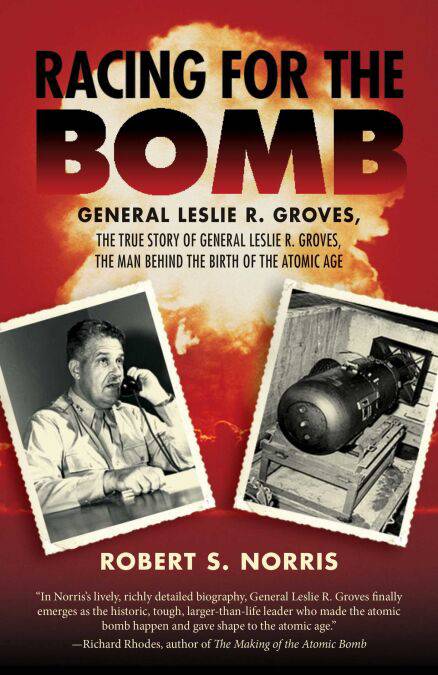
Racing for the Bomb EBOOK
The True Story of General Leslie R. Groves, the Man behind the Birth of the Atomic Age
Robert S. Norris
Ebook | Anglais
14,53 €
+ 14 points
Description
In September 1942, Colonel Leslie R. Groves was given the job of building the atomic bomb. As a career officer in the Army Corps of Engineers, Groves had overseen hundreds of military construction projects, including the Pentagon. Until now, scientists have received the credit for the Manhattan Project’s remarkable achievements. And yet, it was Leslie R. Groves who made things happen. It was Groves who drove manufacturers, construction crews, scientists, industrialists, and military and civilian officials to come up with the money, the materials, and the plans to solve thousands of problems and build the bomb in only two years. It was his operation, and in Racing for the Bomb he emerges as a take-charge, can-do figure who succeeds in the face of formidable odds.
Revealed for the first time in Racing for the Bomb, Groves played a crucial and decisive role in the planning, timing, and targeting of the Hiroshima and Nagasaki missions. Norris offers new insights into the complex and controversial questions surrounding the decision to drop the bomb in Japan and Groves’s actions during World War II, which had a lasting imprint on the nuclear age and the Cold War that followed.
Grove’s extensive influence on key institutions of postwar America has been overlooked for too long. In this full-scale biography, which includes archival material and family letters and documents and features several previously unpublished photographs, Norris places Groves at the center of the amazing Manhattan Project story.
Skyhorse Publishing, along with our Arcade, Good Books, Sports Publishing, and Yucca imprints, is proud to publish a broad range of biographies, autobiographies, and memoirs. Our list includes biographies on well-known historical figures like Benjamin Franklin, Nelson Mandela, and Alexander Graham Bell, as well as villains from history, such as Heinrich Himmler, John Wayne Gacy, and O. J. Simpson. We have also published survivor stories of World War II, memoirs about overcoming adversity, first-hand tales of adventure, and much more. While not every title we publish becomes a New York Times bestseller or a national bestseller, we are committed to books on subjects that are sometimes overlooked and to authors whose work might not otherwise find a home.
Revealed for the first time in Racing for the Bomb, Groves played a crucial and decisive role in the planning, timing, and targeting of the Hiroshima and Nagasaki missions. Norris offers new insights into the complex and controversial questions surrounding the decision to drop the bomb in Japan and Groves’s actions during World War II, which had a lasting imprint on the nuclear age and the Cold War that followed.
Grove’s extensive influence on key institutions of postwar America has been overlooked for too long. In this full-scale biography, which includes archival material and family letters and documents and features several previously unpublished photographs, Norris places Groves at the center of the amazing Manhattan Project story.
Skyhorse Publishing, along with our Arcade, Good Books, Sports Publishing, and Yucca imprints, is proud to publish a broad range of biographies, autobiographies, and memoirs. Our list includes biographies on well-known historical figures like Benjamin Franklin, Nelson Mandela, and Alexander Graham Bell, as well as villains from history, such as Heinrich Himmler, John Wayne Gacy, and O. J. Simpson. We have also published survivor stories of World War II, memoirs about overcoming adversity, first-hand tales of adventure, and much more. While not every title we publish becomes a New York Times bestseller or a national bestseller, we are committed to books on subjects that are sometimes overlooked and to authors whose work might not otherwise find a home.
Spécifications
Parties prenantes
- Auteur(s) :
- Editeur:
Contenu
- Nombre de pages :
- 752
- Langue:
- Anglais
Caractéristiques
- EAN:
- 9781632201010
- Date de parution :
- 20-10-14
- Format:
- Ebook
- Protection digitale:
- Adobe DRM
- Format numérique:
- ePub



Seulement chez Librairie Club
+ 14 points sur votre carte client de Librairie Club
Cadeau

Cadeau


Les avis
Nous publions uniquement les avis qui respectent les conditions requises. Consultez nos conditions pour les avis.