


En raison d'une grève chez bpost, des retards de livraison peuvent survenir. Besoin de quelque chose en urgence ? Optez pour un retrait en magasin ou rendez-vous dans une Librairie Club à proximité.
- Retrait en 2 heures
- Assortiment impressionnant
- Paiement sécurisé
- Toujours un magasin près de chez vous
En raison d'une grève chez bpost, des retards de livraison peuvent survenir. Besoin de quelque chose en urgence ? Optez pour un retrait en magasin ou rendez-vous dans une Librairie Club à proximité.
- Retrait en 2 heures
- Assortiment impressionnant
- Paiement sécurisé
- Toujours un magasin près de chez vous


172,95 €
+ 345 points
Description
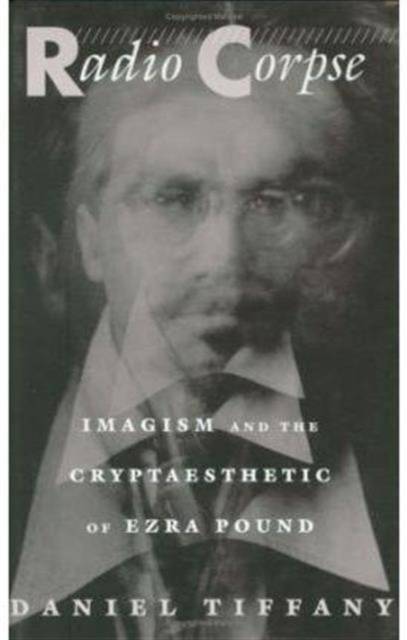
About the origins of Anglo-American poetic modernism, one thing is certain: it started with a notion of the image, described variously by Ezra Pound as an ideogram and a vortex. We have reason to be less confident, however, about the relation between these puzzling conceptions of the image and the doctrine of literary positivism that is generally held to be the most important legacy of Imagism. No satisfactory account exists, moreover, of what bearing these foundational principles may have on Pound's later engagement with fascism. Nor is it clear how figures such as the vortex and the ideogram might contribute generally to our understanding of modern visual culture and its compulsive appeal.
Radio Corpse addresses these issues and offers a fundamental revision of one of the most powerful and persistent aesthetic ideologies of modernism. Focusing on the necrophilic dimension of Pound's earliest poetry and on the inflections of materiality authorized by the modernist image, Daniel Tiffany establishes a continuum between Decadent practice and the incipient avant-garde, between the prehistory of the image and its political afterlife, between what Pound calls the "corpse language" of late Victorian poetry and a conception of the image that borrows certain "radioactive" qualities from the historical discovery of radium and the development of radiography. Emphasizing the phantasmic effects of translation (and exchange) in Pound's poetry, Tiffany argues that the cadaverous--and radiological--properties of the image culminate, formally and ideologically, in Pound's fascist radio broadcasts during World War II. Ultimately, the invisibility of these "radiant" images places in question basic assumptions regarding the optical character of images--assumptions currently being challenged by imageric technologies such as magnetic resonance imaging and positron emission tomography.Spécifications
Parties prenantes
- Auteur(s) :
- Editeur:
Contenu
- Nombre de pages :
- 302
- Langue:
- Anglais
Caractéristiques
- EAN:
- 9780674746626
- Date de parution :
- 11-08-98
- Format:
- Livre relié
- Format numérique:
- Genaaid
- Dimensions :
- 158 mm x 242 mm
- Poids :
- 689 g



Seulement chez Librairie Club
+ 345 points sur votre carte client de Librairie Club
Cadeau


Les avis
Nous publions uniquement les avis qui respectent les conditions requises. Consultez nos conditions pour les avis.