


En raison d'une grève chez bpost, des retards de livraison peuvent survenir. Besoin de quelque chose en urgence ? Optez pour un retrait en magasin ou rendez-vous dans une Librairie Club à proximité.
- Retrait en 2 heures
- Assortiment impressionnant
- Paiement sécurisé
- Toujours un magasin près de chez vous
En raison d'une grève chez bpost, des retards de livraison peuvent survenir. Besoin de quelque chose en urgence ? Optez pour un retrait en magasin ou rendez-vous dans une Librairie Club à proximité.
- Retrait en 2 heures
- Assortiment impressionnant
- Paiement sécurisé
- Toujours un magasin près de chez vous



Description
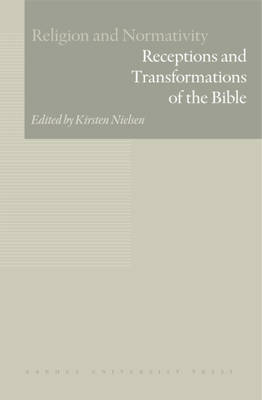
The Bible has been called the 'Book of Books'. In Western culture it is considered a literary work and it has a central role in both the Jewish and Christian religions. The Bible has inspired much rewriting and has also provoked contradiction. It has not only had a normative function for future poets, but philosophers and scientists have also applied biblical motives and have struggled with biblical ideas to formulate new thoughts. Drawing on examples from the works of Torgny Lindgren, Philip Pullman, Milan Kundera and Martin A. Hansen, the first part of this volume begins by examining the reception and transformation of the Bible in literature. Then, using examples from Søren Kierkegaard, K.E. Løgstrup and Paul Ricoeur, the second part goes on to explore the reception and transformation of the Bible in philosophy, considering also its reception within evolutionary theory. The third and last part, deals with the Bible's reception and transformation in religious communities, and considers, inter alia: the role of the Torah in Judaism - both as text and as artefact; and, the Bible, as a model for Christian ideas, as a challenge to scriptural performance and as a norm for the images of God in modern hymns. All three sections of the book are introduced by some general reflections offering a framework for the individual articles. The Book of Books is still a work that inspires new thoughts. The aim of Reception and Transformations of the Bible is thus to challenge and provoke readers to further discussion on the authority of the Bible.
Spécifications
Parties prenantes
- Auteur(s) :
- Editeur:
Contenu
- Nombre de pages :
- 188
- Langue:
- Anglais
- Collection :
Caractéristiques
- EAN:
- 9788779344266
- Date de parution :
- 22-04-09
- Format:
- Livre relié
- Format numérique:
- Genaaid
- Dimensions :
- 168 mm x 246 mm
- Poids :
- 535 g


Seulement chez Librairie Club
+ 122 points sur votre carte client de Librairie Club
Cadeau


Les avis
Nous publions uniquement les avis qui respectent les conditions requises. Consultez nos conditions pour les avis.