


- Retrait en 2 heures
- Assortiment impressionnant
- Paiement sécurisé
- Toujours un magasin près de chez vous
- Retrait en 2 heures
- Assortiment impressionnant
- Paiement sécurisé
- Toujours un magasin près de chez vous



27,95 €
+ 55 points
Description
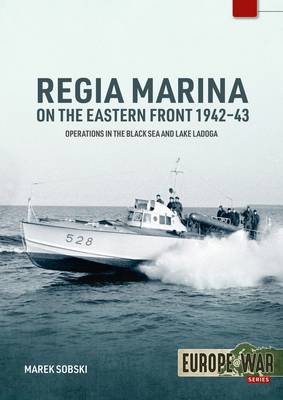
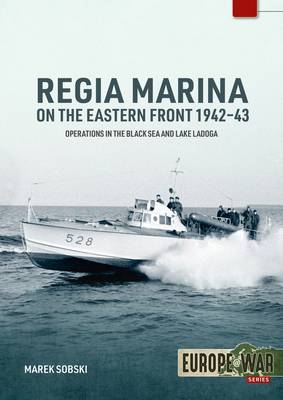
Regia Marina on the Eastern Front 1942-1943 is the first English-language study devoted entirely to Italy's naval operations in the Black Sea and Lake Ladoga during the Second World War. Often overlooked in standard histories, the Italian naval contingent played a significant--if small-scale--role in Axis efforts to sever Soviet maritime supply lines, particularly during the prolonged siege of Sevastopol.
This volume examines the political and strategic origins of Italian involvement in the East, from early German-Italian coordination through to the complex logistics of transporting torpedo boats, midget submarines, and explosive motorboats across Axis-held Europe. Drawing on extensive primary sources, including post-war Italian naval publications, Soviet assessments, and recently declassified operational reports, the book offers a detailed reconstruction of the deployment of the IVa Flottiglia MAS, its missions in support of German operations, and its eventual withdrawal in the face of Red Army advances.
Special attention is given to the technical specifications, adaptations, and battlefield performance of the CB-class midget submarines, MAS "500" series motor torpedo boats, and the Decima MAS's unique manned explosive craft. The volume also sheds light on Soviet-Italian naval cooperation during the interwar years--an ironic but strategically important chapter in the history of both navies--as well as on the Italian loss of oil convoys in the Black Sea and through the Turkish Straits.
Despite the modest size of the Italian deployment, the commitment of personnel and material to this little-known theatre represents one of the more audacious chapters in the Regia Marina's wartime record. Their operations--undertaken with limited resources and far from home waters--are a testament to Italy's naval adaptability and the complexity of Axis collaboration.
Heavily illustrated with rare photos, technical diagrams, and specially commissioned maps and artworks, Regia Marina on the Eastern Front fills a critical gap in the historiography of World War II naval warfare and expands our understanding of the multinational nature of the Axis war effort.
This volume examines the political and strategic origins of Italian involvement in the East, from early German-Italian coordination through to the complex logistics of transporting torpedo boats, midget submarines, and explosive motorboats across Axis-held Europe. Drawing on extensive primary sources, including post-war Italian naval publications, Soviet assessments, and recently declassified operational reports, the book offers a detailed reconstruction of the deployment of the IVa Flottiglia MAS, its missions in support of German operations, and its eventual withdrawal in the face of Red Army advances.
Special attention is given to the technical specifications, adaptations, and battlefield performance of the CB-class midget submarines, MAS "500" series motor torpedo boats, and the Decima MAS's unique manned explosive craft. The volume also sheds light on Soviet-Italian naval cooperation during the interwar years--an ironic but strategically important chapter in the history of both navies--as well as on the Italian loss of oil convoys in the Black Sea and through the Turkish Straits.
Despite the modest size of the Italian deployment, the commitment of personnel and material to this little-known theatre represents one of the more audacious chapters in the Regia Marina's wartime record. Their operations--undertaken with limited resources and far from home waters--are a testament to Italy's naval adaptability and the complexity of Axis collaboration.
Heavily illustrated with rare photos, technical diagrams, and specially commissioned maps and artworks, Regia Marina on the Eastern Front fills a critical gap in the historiography of World War II naval warfare and expands our understanding of the multinational nature of the Axis war effort.
Spécifications
Parties prenantes
- Auteur(s) :
- Editeur:
Contenu
- Nombre de pages :
- 96
- Langue:
- Anglais
- Collection :
Caractéristiques
- EAN:
- 9781806721559
- Date de parution :
- 15-06-26
- Format:
- Livre broché
- Format numérique:
- Trade paperback (VS)
- Dimensions :
- 211 mm x 297 mm


Seulement chez Librairie Club
+ 55 points sur votre carte client de Librairie Club
Cadeau


Les avis
Nous publions uniquement les avis qui respectent les conditions requises. Consultez nos conditions pour les avis.