


- Retrait en 2 heures
- Assortiment impressionnant
- Paiement sécurisé
- Toujours un magasin près de chez vous
- Retrait gratuit dans votre magasin Club
- 7.000.0000 titres dans notre catalogue
- Payer en toute sécurité
- Toujours un magasin près de chez vous



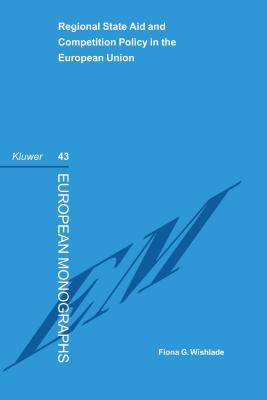
Regional State Aid and Competition Policy in the European Union
Fiona Wishlade
102,22 €
+ 204 points
Description
The increasing importance attached to the economic and social cohesion of the European Union since the 1980s, and the role of competition policy in achieving this objective, has special significance for the control of regional aids, given the general ban on State aid. Regional aids are considered to have the potential to contribute to economic and social cohesion and to undermine its attainment. The notion of competition policy as an instrument of economic and social cohesion has become a standard part of Commission rhetoric in defence of its actions. This book is concerned with the influence of EU competition policy on the regional policies of the Member States. It focuses on how the European Commission has interpreted the derogations from the State aid ban to enable the conduct of regional aid policies. The book takes both a historical perspective, tracing the evolution of policy, and a thematic one, examining in particular the relationship between EU competition and cohesion policies and the treatment of aid to very large projects. The author clearly demonstrates that, in reality, the competition policy control of regional aids is of much longer standing than the community¿s explicit regional aid policy and, in many respects, of arguably greater influence. She shows how competition policy has for almost thirty years shaped the design, scope and implementation of national regional aid policies; in no EU country has regional policy been unaffected by Commission intervention in the name of competition policy. Moreover, the policy principles developed for the EU now apply extraterritorially to members of the European Economic Area and to the current applicant countries. The study¿s overall perspective is policy-oriented. It considers both the impact of Commission intervention in the past and the implications of policy for the future, especially in the context of enlargement and a wider Europe. It will be an invaluable resource for all policymakers and practitioners active in the fields of economic development, regional policy and State aid law at European, national and subnational levels.
Spécifications
Parties prenantes
- Auteur(s) :
- Editeur:
Contenu
- Nombre de pages :
- 279
- Langue:
- Anglais
- Collection :
Caractéristiques
- EAN:
- 9789041119759
- Date de parution :
- 28-02-03
- Format:
- Livre relié
- Format numérique:
- Genaaid
- Dimensions :
- 156 mm x 234 mm
- Poids :
- 589 g


Seulement chez Librairie Club
+ 204 points sur votre carte client de Librairie Club
Cadeau

Cadeau


Les avis
Nous publions uniquement les avis qui respectent les conditions requises. Consultez nos conditions pour les avis.