


- Retrait en 2 heures
- Assortiment impressionnant
- Paiement sécurisé
- Toujours un magasin près de chez vous
- Retrait en 2 heures
- Assortiment impressionnant
- Paiement sécurisé
- Toujours un magasin près de chez vous



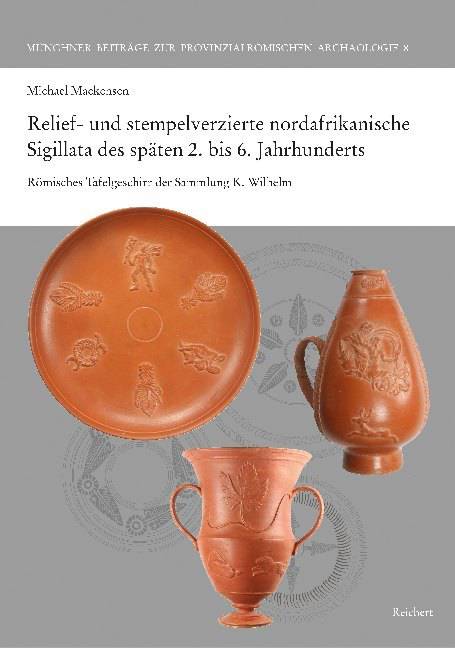
Relief- Und Stempelverzierte Nordafrikanische Sigillata Des Späten 2. Bis 6. Jahrhunderts
Römisches Tafelgeschirr Der Sammlung K. Wilhelm
Michael Mackensen
103,45 €
+ 206 points
Description
The study presents a summary of the development over 500 years of the high-quality North African red slip ware, a fineware which was mainly used as tableware. The masterful handicraft of several large pottery production centres in one of Rome's economically most important provinces, Africa Proconsularis, is particularly well reflected in the exceptional relief-decorated wares. The study focuses on the rare appliqué-decorated north Tunisian red slip ware of the late 2nd/early 3rd century and also the wide range of forms and decorations of the appliqué-, relief- and stamp-decorated red slip ware of the early 3rd to mid 6th century, produced in Sidi Marzouk Tounsi, the most important pottery production centre in central Tunisia which operated for at least 350 years. Production at this site included lamps and terracotta figurines in red slip ware as well, but in particular a wide variety of plain and decorated red slip ware vessels made not only for a regional market, but for Mediterranean long-distance trade.
Research is based on the exceptionally extensive collection accumulated by K. Wilhelm mainly between 1960 and 1995. The material is presented in a catalogue containing 138 vessels and 104 fragments, including several unique vessel forms and a series of unknown appliqués and stamp types. For comparison, some important, but partially unpublished vessels and fragments in several European, North American and North African museums and private collections were additionally taken into account.
For the first time, the decoration schemes and also the vessel forms of an appliqué-decorated pottery produced in a north-eastern and in another central Tunisian production centre throughout the late 2nd and 3rd century, are classified and clearly represented. The research also succeeded in defining the late phase of the so-called El Aouja ware and highlights the stylistic development leading to the appliqué-decorated red slip ware of the 4th century. Moreover, the analysis of the appliqué and relief decoration with pagan, allegoric and early Christian motifs emphasises an iconographic transformation over the centuries based on the visible change in the figural scenes. Of utmost importance is the fact that the production centre at Sidi Marzouk Tounsi clearly survived the Vandal rule of the provinces Africa and Byzacena (429-533/534). Alongside the late relief-decorated red slip wares, there is now also evidence for the production of mould-made, relief-decorated red slip ware platters and several specific forms with mainly Christian motifs, far exceeding the previously suggested end of production (c. 430/440) and suggesting an end around the middle of the 6th century.
Research is based on the exceptionally extensive collection accumulated by K. Wilhelm mainly between 1960 and 1995. The material is presented in a catalogue containing 138 vessels and 104 fragments, including several unique vessel forms and a series of unknown appliqués and stamp types. For comparison, some important, but partially unpublished vessels and fragments in several European, North American and North African museums and private collections were additionally taken into account.
For the first time, the decoration schemes and also the vessel forms of an appliqué-decorated pottery produced in a north-eastern and in another central Tunisian production centre throughout the late 2nd and 3rd century, are classified and clearly represented. The research also succeeded in defining the late phase of the so-called El Aouja ware and highlights the stylistic development leading to the appliqué-decorated red slip ware of the 4th century. Moreover, the analysis of the appliqué and relief decoration with pagan, allegoric and early Christian motifs emphasises an iconographic transformation over the centuries based on the visible change in the figural scenes. Of utmost importance is the fact that the production centre at Sidi Marzouk Tounsi clearly survived the Vandal rule of the provinces Africa and Byzacena (429-533/534). Alongside the late relief-decorated red slip wares, there is now also evidence for the production of mould-made, relief-decorated red slip ware platters and several specific forms with mainly Christian motifs, far exceeding the previously suggested end of production (c. 430/440) and suggesting an end around the middle of the 6th century.
Spécifications
Parties prenantes
- Auteur(s) :
- Editeur:
Contenu
- Nombre de pages :
- 596
- Langue:
- Allemand
- Collection :
Caractéristiques
- EAN:
- 9783954904136
- Date de parution :
- 22-11-19
- Format:
- Livre relié
- Format numérique:
- Genaaid
- Dimensions :
- 218 mm x 305 mm
- Poids :
- 3043 g


Seulement chez Librairie Club
+ 206 points sur votre carte client de Librairie Club
Cadeau


Les avis
Nous publions uniquement les avis qui respectent les conditions requises. Consultez nos conditions pour les avis.