


- Retrait en 2 heures
- Assortiment impressionnant
- Paiement sécurisé
- Toujours un magasin près de chez vous
- Retrait en 2 heures
- Assortiment impressionnant
- Paiement sécurisé
- Toujours un magasin près de chez vous



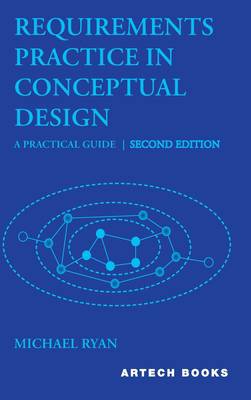
Requirements Practice in Conceptual Design
A Practical Guide, Second Edition
Michael Ryan
Livre relié | Anglais
142,45 €
+ 284 points
Description
Requirements Practice in Conceptual Design: A Practical Guide, Second Edition presents a rigorous, fully actionable methodology for developing formal system requirements at the earliest and most decisive stage of the system life cycle. Grounded in the reality that flawed requirements cannot be corrected downstream, the book shows how to establish a complete, consistent, and validated foundation before design decisions harden.
Bridging the gap between international standards and handbooks such as ISO/IEC/IEEE 15288 and the INCOSE Systems Engineering Handbook and the realities of day-to-day practice, this timely resource translates abstract mandates into clear, step-by-step activities for system-level logical design and requirements development. The book introduces a structured conceptual design methodology (CDM) that guides practitioners from stakeholder identification and business needs analysis through functional decomposition, system requirements definition, and change control. It explains the logic, flow, and documentation needed to produce requirements that are feasible, traceable, and verifiable, using worked examples and integrated case studies to demonstrate how business intent is aligned with engineering execution. Throughout, it highlights requirements practice as the critical interface linking systems engineering, project management, and business analysis.
Written for systems engineers, project managers, business analysts, and requirements engineers working in defense, aerospace, infrastructure, and advanced manufacturing, this authoritative reference balances academic rigor with practical clarity. With chapter review questions and real-world application throughout, Requirements Practice in Conceptual Design equips professionals and students alike to perform formal requirements engineering with precision and confidence-ensuring every system begins on the right foundation.
Spécifications
Parties prenantes
- Auteur(s) :
- Editeur:
Contenu
- Nombre de pages :
- 336
- Langue:
- Anglais
Caractéristiques
- EAN:
- 9781685691356
- Date de parution :
- 31-03-26
- Format:
- Livre relié
- Format numérique:
- Genaaid
- Dimensions :
- 152 mm x 229 mm
- Poids :
- 684 g


Seulement chez Librairie Club
+ 284 points sur votre carte client de Librairie Club
Cadeau


Les avis
Nous publions uniquement les avis qui respectent les conditions requises. Consultez nos conditions pour les avis.