


- Retrait en 2 heures
- Assortiment impressionnant
- Paiement sécurisé
- Toujours un magasin près de chez vous
- Retrait gratuit dans votre magasin Club
- 7.000.0000 titres dans notre catalogue
- Payer en toute sécurité
- Toujours un magasin près de chez vous



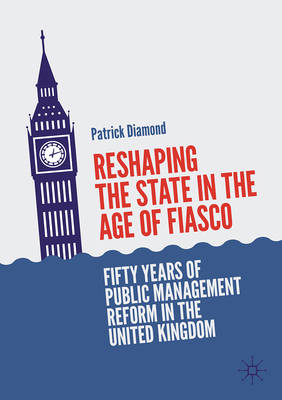
Reshaping the State in the Age of Fiasco
Fifty Years of Public Management Reform in the United Kingdom
Patrick Diamond
Livre broché | Anglais
42,95 €
+ 85 points
Description
Reshaping the State in the Age of Fiasco meticulously analyses fifty years of structural innovation in UK public management reform. Rather than ascribing policymaking blunders to the ascendency of New Public Management, it focuses on how the rise of managerialism led to pathologies and contradictions arising from the traditions and culture of British government. In the post-war era, the myth prevailed that UK institutions, policies and solutions offered a model for the rest of the world, while there was little meaningful that could be learnt from elsewhere. Yet recent governing crises, notably fiscal austerity, Brexit and the Covid-19 pandemic underlined that despite decades of reform, the performance of the British state and public services remained glaringly inadequate. There has been far less improvement in efficiency, economy and effectiveness than was promised. This book asks why that is so, and what can be done.
Spécifications
Parties prenantes
- Auteur(s) :
- Editeur:
Contenu
- Nombre de pages :
- 384
- Langue:
- Anglais
Caractéristiques
- EAN:
- 9783032128645
- Date de parution :
- 22-06-26
- Format:
- Livre broché
- Format numérique:
- Trade paperback (VS)
- Dimensions :
- 148 mm x 210 mm


Seulement chez Librairie Club
+ 85 points sur votre carte client de Librairie Club
Cadeau

Cadeau


Les avis
Nous publions uniquement les avis qui respectent les conditions requises. Consultez nos conditions pour les avis.