


- Retrait en 2 heures
- Assortiment impressionnant
- Paiement sécurisé
- Toujours un magasin près de chez vous
- Retrait en 2 heures
- Assortiment impressionnant
- Paiement sécurisé
- Toujours un magasin près de chez vous



47,45 €
+ 94 points
Description
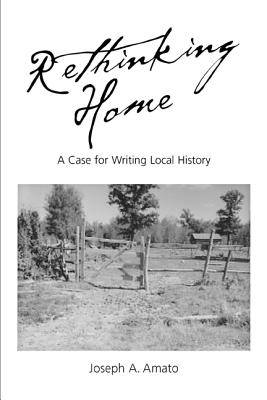
Joseph A. Amato proposes a bold and innovative approach to writing local history in this imaginative, wide-ranging, and deeply engaging exploration of the meaning of place and home. Arguing that people of every place and time deserve a history, Amato draws on his background as a European cultural historian and a prolific writer of local history to explore such topics as the history of cleanliness, sound, anger, madness, the clandestine, and the environment in southwestern Minnesota. While dedicated to the unique experiences of a place, his lively work demonstrates that contemporary local history provides a vital link for understanding the relation between immediate experience and the metamorphosis of the world at large. In an era of encompassing forces and global sensibilities, Rethinking Home advocates the power of local history to revivify the individual, the concrete, and the particular. This singular book offers fresh perspectives, themes, and approaches for energizing local history at a time when the very notion of place is in jeopardy.
Amato explains how local historians shape their work around objects we can touch and institutions we have directly experienced. For them, theory always gives way to facts. His vivid portraits of individual people, places, situations, and cases (which include murders, crop scams, and taking custody of the law) are joined to local illustrations of the use of environmental and ecological history. This book also puts local history in the service of contemporary history with the examination of recent demographic, social, and cultural transformations. Critical concluding chapters on politics and literature--especially Sinclair Lewis's Main Street and Longfellow's Hiawatha--show how metaphor and myth invent, distort, and hold captive local towns, peoples, and places.
Amato explains how local historians shape their work around objects we can touch and institutions we have directly experienced. For them, theory always gives way to facts. His vivid portraits of individual people, places, situations, and cases (which include murders, crop scams, and taking custody of the law) are joined to local illustrations of the use of environmental and ecological history. This book also puts local history in the service of contemporary history with the examination of recent demographic, social, and cultural transformations. Critical concluding chapters on politics and literature--especially Sinclair Lewis's Main Street and Longfellow's Hiawatha--show how metaphor and myth invent, distort, and hold captive local towns, peoples, and places.
Spécifications
Parties prenantes
- Auteur(s) :
- Editeur:
Contenu
- Nombre de pages :
- 261
- Langue:
- Anglais
Caractéristiques
- EAN:
- 9780520232938
- Date de parution :
- 01-04-02
- Format:
- Livre broché
- Format numérique:
- Trade paperback (VS)
- Dimensions :
- 174 mm x 228 mm
- Poids :
- 358 g


Seulement chez Librairie Club
+ 94 points sur votre carte client de Librairie Club
Cadeau


Les avis
Nous publions uniquement les avis qui respectent les conditions requises. Consultez nos conditions pour les avis.