


- Retrait en 2 heures
- Assortiment impressionnant
- Paiement sécurisé
- Toujours un magasin près de chez vous
- Retrait en 2 heures
- Assortiment impressionnant
- Paiement sécurisé
- Toujours un magasin près de chez vous



9,99 €
+ 9 points
Description
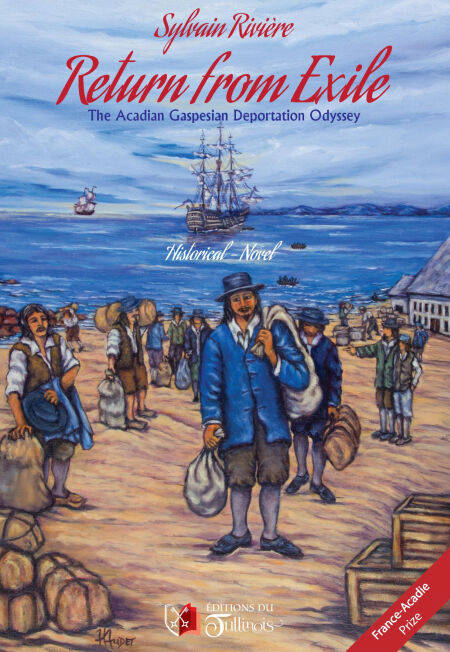
Son of Acadian deportees, Olivier Barillot, known as Tipon, landed in Paspéya in 1774, on one of the three schooners of the Robin Pipon Company, which would exercise a monopoly on fisheries in Gaspésie and throughout the Baie des Chaleurs for nearly two centuries.
Return from Exile is much more than the story of a return, it is also the one of the population of Gaspésie, of Jersey slavery, of the corsair war and of the long quest of these people from the sea towards freedom and the almost mystical autonomy of this country still to be achieved...
Return from Exile, a half century of history which coincides with the first Acadian contingent arriving in Gaspésie working for the Jersey firm until the departure of its all-powerful god: Charles Robin.
The ancestors of Sylvain Rivière suffered the British ignominy from the Deportation of the Acadians, the prisons of England and the too long wandering in France, which led them from Poitou to Saint-Malo, before homesickness brought them back, in the spring of 1774, with seven Acadian families, to Paspébiac, working for the Robins, true slavers, who dominated, as good Huguenots of Jersey Island, the Gaspesian economy through the monopoly exercised around the cod trade, to the detriment of the Gaspesian fisherman, reduced in some way to slavery, from generation to generation.
ABOUT THE AUTHOR
Sylvain Rivière, born in Carleton, Gaspésie, in 1955, is a poet, author of songs, playwright, storyteller, short story writer, novelist, biographer and director. During his career dating back to 1981, he received numerous distinctions, including the France-Acadie, Jovette-Bernier, Arthur-Buies, Acadie-Québec Prizes, as well as the Silver Medal of the French Renaissance for his commitment to the Francophonie. He also received the Gasparic Prize, in Romania, for the translation of his poetic work, as well as the Mnémo Culture and Traditions Prize of Quebec, the Reconnaissance Prize for artistic creation from the Conseil des arts et des lettres du Québec and the Bertrand B. LeBlanc Prize, in addition he was a finalist for the Atmatak Prizes and the Grand Prix du Journal de Montréal.
Return from Exile is much more than the story of a return, it is also the one of the population of Gaspésie, of Jersey slavery, of the corsair war and of the long quest of these people from the sea towards freedom and the almost mystical autonomy of this country still to be achieved...
Return from Exile, a half century of history which coincides with the first Acadian contingent arriving in Gaspésie working for the Jersey firm until the departure of its all-powerful god: Charles Robin.
The ancestors of Sylvain Rivière suffered the British ignominy from the Deportation of the Acadians, the prisons of England and the too long wandering in France, which led them from Poitou to Saint-Malo, before homesickness brought them back, in the spring of 1774, with seven Acadian families, to Paspébiac, working for the Robins, true slavers, who dominated, as good Huguenots of Jersey Island, the Gaspesian economy through the monopoly exercised around the cod trade, to the detriment of the Gaspesian fisherman, reduced in some way to slavery, from generation to generation.
ABOUT THE AUTHOR
Sylvain Rivière, born in Carleton, Gaspésie, in 1955, is a poet, author of songs, playwright, storyteller, short story writer, novelist, biographer and director. During his career dating back to 1981, he received numerous distinctions, including the France-Acadie, Jovette-Bernier, Arthur-Buies, Acadie-Québec Prizes, as well as the Silver Medal of the French Renaissance for his commitment to the Francophonie. He also received the Gasparic Prize, in Romania, for the translation of his poetic work, as well as the Mnémo Culture and Traditions Prize of Quebec, the Reconnaissance Prize for artistic creation from the Conseil des arts et des lettres du Québec and the Bertrand B. LeBlanc Prize, in addition he was a finalist for the Atmatak Prizes and the Grand Prix du Journal de Montréal.
Spécifications
Parties prenantes
- Auteur(s) :
- Editeur:
Contenu
- Langue:
- Anglais
Caractéristiques
- EAN:
- 9782898094460
- Date de parution :
- 28-07-25
- Format:
- Ebook
- Protection digitale:
- /
- Format numérique:
- ePub


Seulement chez Librairie Club
+ 9 points sur votre carte client de Librairie Club
Cadeau


Les avis
Nous publions uniquement les avis qui respectent les conditions requises. Consultez nos conditions pour les avis.