


- Retrait en 2 heures
- Assortiment impressionnant
- Paiement sécurisé
- Toujours un magasin près de chez vous
- Retrait gratuit dans votre magasin Club
- 7.000.0000 titres dans notre catalogue
- Payer en toute sécurité
- Toujours un magasin près de chez vous



2,99 €
+ 2 points
Description
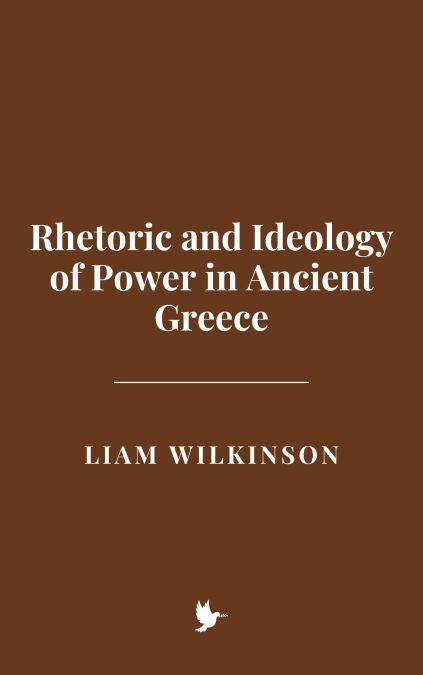
This book explores the profound relationship between rhetoric and political power in the ancient world, tracing the evolution of rhetorical practices in ancient Greece. The political history and ideology of ancient Greece are deeply intertwined with the development and use of rhetoric as both a tool for governance and a means of shaping public opinion. Central to the political life of ancient Greece, particularly in Athens, rhetoric became the principal means of participation in the democratic process, with citizens engaging in debates within the Ekklesia (Assembly) and the courts. The ideals of Athenian democracy, grounded in the belief in equality and active participation, relied on the effective use of speech to influence decisions on war, laws, and governance. The rhetoric of democratic leaders such as Pericles helped to define Athenian identity, presenting the city-state as the epitome of virtue, equality, and civic responsibility. However, the power of rhetoric was not always used for virtuous purposes. Figures like Cleon and Alcibiades used persuasive speech to manipulate public opinion, leading Athens to make politically and militarily disastrous decisions.
Rhetoric in ancient Greece, especially in the context of imperial expansion and warfare, also evolved to serve the needs of political leaders seeking to consolidate power. The rhetoric of kingship in the Hellenistic period, exemplified by figures like Alexander the Great, shifted from democratic participation to the projection of divine legitimacy. Alexander and his successors used rhetoric to legitimize their rule, frame military conquests as divinely ordained, and unite diverse peoples under a common imperial identity.
The transition from Athenian democracy to the monarchy of the Hellenistic kings reflected a significant shift in the political ideology of the Greek world, as rhetoric became more closely associated with imperial governance and the centralization of power. The rhetorical techniques developed in Athens influenced later empires, including Rome, where oratory was used to justify imperial rule and consolidate political authority. The legacy of Greek political thought and rhetorical practice thus not only shaped the governance of Greece but also laid the foundation for the political ideologies of later empires, highlighting the enduring role of rhetoric in the construction and maintenance of political power.
Spécifications
Parties prenantes
- Auteur(s) :
- Editeur:
Contenu
- Langue:
- Anglais
Caractéristiques
- EAN:
- 9798230459620
- Date de parution :
- 04-02-25
- Format:
- Ebook
- Protection digitale:
- /
- Format numérique:
- ePub


Seulement chez Librairie Club
+ 2 points sur votre carte client de Librairie Club
Cadeau

Cadeau


Les avis
Nous publions uniquement les avis qui respectent les conditions requises. Consultez nos conditions pour les avis.