


- Retrait en 2 heures
- Assortiment impressionnant
- Paiement sécurisé
- Toujours un magasin près de chez vous
- Retrait en 2 heures
- Assortiment impressionnant
- Paiement sécurisé
- Toujours un magasin près de chez vous



4,99 €
+ 4 points
Format
Description
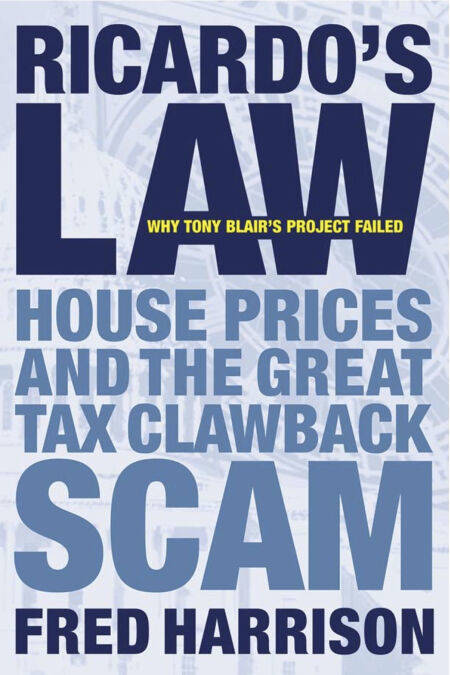
This book offers the first comprehensive assessment of Tony Blair's premiership and his Third Way project. It reveals the hidden flaw in the market economy which explains why politicians, of all parties, cannot keep their grand promises.
Blair promised to reform the Welfare State - the pact between people and their governments to abolish the evils of poverty and ignorance. In fact, however, despite a record three election victories in a row, the gap between rich and poor widened. The reason, the author argues, is the method government relies on to raise taxes. Contrary to intention, the tax burden on low-income earners increased, while property owners have enjoyed record capital gains. The outcome is over £1trillion indebtedness which renders tens of thousands of families vulnerable to bankruptcy and the loss of their homes in the next recession.
Fred Harrison reveals how taxpayers' money is channelled behind the scenes, through 'the invisible hand', from poor to rich people and from poor to rich parts of the country.
Public spending, for example on roads, railways, schools and hospitals, makes a major contribution to rising land values. These benefit house and other property owners, rich ones more than poor ones, desirable locations and asset-rich parts of the country more than poor ones, but those who rent their properties do not share in the windfall gains. In fact, they have to pay rising rents.
Taking Britain as a case study, Harrison escorts the reader along an old Roman road from south to north to pin-point how poverty is institutionalised in the growing divide between rich and poor. Along the way he illuminates the inner workings of tax policies and property rights that similarly afflict all market economies
Tax reform is on the political agenda in the West, but politicians continue to believe their consultants who tell them that 'broad-based' taxes are necessary.
Blair promised to reform the Welfare State - the pact between people and their governments to abolish the evils of poverty and ignorance. In fact, however, despite a record three election victories in a row, the gap between rich and poor widened. The reason, the author argues, is the method government relies on to raise taxes. Contrary to intention, the tax burden on low-income earners increased, while property owners have enjoyed record capital gains. The outcome is over £1trillion indebtedness which renders tens of thousands of families vulnerable to bankruptcy and the loss of their homes in the next recession.
Fred Harrison reveals how taxpayers' money is channelled behind the scenes, through 'the invisible hand', from poor to rich people and from poor to rich parts of the country.
Public spending, for example on roads, railways, schools and hospitals, makes a major contribution to rising land values. These benefit house and other property owners, rich ones more than poor ones, desirable locations and asset-rich parts of the country more than poor ones, but those who rent their properties do not share in the windfall gains. In fact, they have to pay rising rents.
Taking Britain as a case study, Harrison escorts the reader along an old Roman road from south to north to pin-point how poverty is institutionalised in the growing divide between rich and poor. Along the way he illuminates the inner workings of tax policies and property rights that similarly afflict all market economies
Tax reform is on the political agenda in the West, but politicians continue to believe their consultants who tell them that 'broad-based' taxes are necessary.
Spécifications
Parties prenantes
- Auteur(s) :
- Editeur:
Contenu
- Nombre de pages :
- 298
- Langue:
- Anglais
Caractéristiques
- EAN:
- 9780856833151
- Date de parution :
- 07-08-12
- Format:
- Ebook
- Protection digitale:
- Digital watermarking
- Format numérique:


Seulement chez Librairie Club
+ 4 points sur votre carte client de Librairie Club
Cadeau


Les avis
Nous publions uniquement les avis qui respectent les conditions requises. Consultez nos conditions pour les avis.