


- Retrait en 2 heures
- Assortiment impressionnant
- Paiement sécurisé
- Toujours un magasin près de chez vous
- Retrait en 2 heures
- Assortiment impressionnant
- Paiement sécurisé
- Toujours un magasin près de chez vous



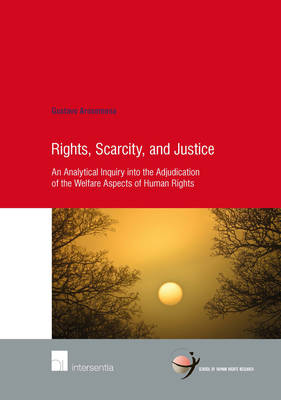
Rights, Scarcity, and Justice
An Analytical Inquiry Into the Adjudication of the Welfare Aspects of Human Rights Volume 65
Gustavo Arosemena Solorzano
77,00 €
+ 154 points
Description
Can human rights really protect people from want? If one is lacking medical care or housing, can one really go to a judge and ask for the provision of such goods and services? These questions have proved divisive for academics, politicians, and judges working in the field of human rights. Some consider that there is no real difference between civil and political rights and economic, social, and cultural rights. Others think that economic, social, and cultural rights have structural features that make their judicial protection unwelcome. This book aims to move this debate forward. It starts by recognizing that while there is no abyss between civil and political rights and economic, social, and cultural rights, some perceptible differences between different duties, arising out of human rights, remain. In particular, duties aiming to provide for basic needs which are significantly costly give rise to problems that deserve special attention. They are structurally disposed to give rise to dilemmas. Under human rights, everybody is entitled to certain goods and services in times of dire need, but in a context of scarcity, there are not enough resources to provide these goods and services to everybody. Under what rule or principle would it be reasonable for judges to intervene in these sorts of situations? What would be the best approach to these problems? How can a judge intervene in these problems while maintaining a commitment to the rights of everyone? The book examines the possibilities of judicial engagement with matters of welfare in situations of scarcity. First, it isolates the real problems that such forms of judicial engagement entail. Then, it presents three distinct strategies for protecting welfare duties judicially: reasonableness, prioritization, and deliberative democratic dialogue. Reasonableness is based on the practice of reasonableness review present in the Constitutional Court of South Africa. By contrast, prioritization and deliberative democratic dialogue constitute more novel alternatives to reasonableness that are loosely inspired in various developments in comparative constitutional law. Finally, the book discusses the relative merits and demerits of these strategies in an analytical framework based on qualitative comparative analysis. (Series: School of Human Rights Research - Vol. 65) [Subject: Human Rights Law, Constitutional Law, Comparative Law]
Spécifications
Parties prenantes
- Auteur(s) :
- Editeur:
Contenu
- Nombre de pages :
- 214
- Langue:
- Anglais
- Collection :
Caractéristiques
- EAN:
- 9781780682754
- Date de parution :
- 18-10-14
- Format:
- Livre broché
- Format numérique:
- Trade paperback (VS)
- Dimensions :
- 170 mm x 240 mm
- Poids :
- 385 g


Seulement chez Librairie Club
+ 154 points sur votre carte client de Librairie Club
Cadeau


Les avis
Nous publions uniquement les avis qui respectent les conditions requises. Consultez nos conditions pour les avis.