


- Retrait en 2 heures
- Assortiment impressionnant
- Paiement sécurisé
- Toujours un magasin près de chez vous
- Retrait en 2 heures
- Assortiment impressionnant
- Paiement sécurisé
- Toujours un magasin près de chez vous



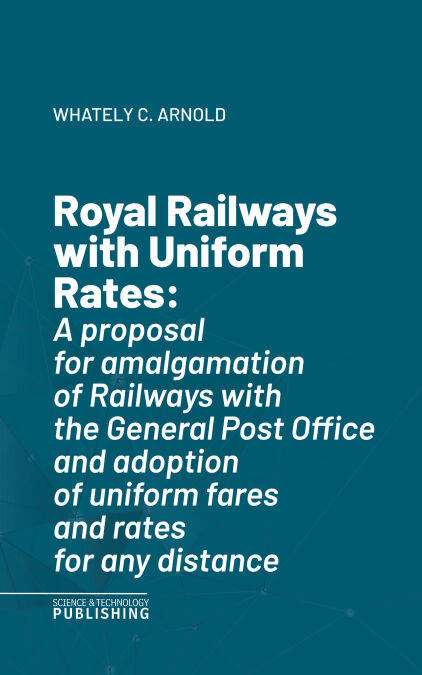
Royal Railways with Uniform Rates EBOOK
A proposal for amalgamation of Railways with the General Post Office and adoption of uniform fares and rates for any distance
Arnold
Ebook | Anglais
19,99 €
+ 19 points
Description
Royal Railways with Uniform Rates: A Proposal for Amalgamation of Railways with the General Post Office and Adoption of Uniform Fares and Rates for Any Distance is a visionary treatise advocating for a radical transformation of the British transportation and postal systems in the 19th century. The author, inspired by the success of the Uniform Penny Post, proposes the integration of the nation’s railways with the General Post Office to create a seamless, government-managed network for both passenger and goods transport. Central to the proposal is the adoption of uniform fares and rates, allowing travelers and shippers to pay a single, fixed price regardless of distance traveled or goods sent, thereby simplifying logistics, reducing administrative complexity, and promoting social and economic mobility. The book meticulously examines the inefficiencies and inequities of the existing railway fare structures, which were often confusing, inconsistent, and prohibitive for the working classes. Drawing parallels to the revolutionary impact of uniform postal rates, the author argues that similar principles applied to railways would democratize travel, stimulate commerce, and foster national unity. The text delves into the practicalities of amalgamating the railways with the Post Office, exploring the potential for improved scheduling, increased safety, and enhanced public service through centralized management. Through detailed analysis, historical context, and persuasive argumentation, Royal Railways with Uniform Rates presents a compelling case for state intervention and standardization in public infrastructure. The book is both a critique of private railway monopolies and a forward-looking blueprint for a more equitable and efficient transportation system. It appeals to reformers, policymakers, and the general public, envisioning a future where mobility and communication are accessible to all, regardless of class or location.
Spécifications
Parties prenantes
- Auteur(s) :
- Editeur:
Contenu
- Langue:
- Anglais
Caractéristiques
- EAN:
- 9782528113561
- Date de parution :
- 31-08-25
- Format:
- Ebook
- Protection digitale:
- /
- Format numérique:
- ePub


Seulement chez Librairie Club
+ 19 points sur votre carte client de Librairie Club
Cadeau


Les avis
Nous publions uniquement les avis qui respectent les conditions requises. Consultez nos conditions pour les avis.