


- Retrait en 2 heures
- Assortiment impressionnant
- Paiement sécurisé
- Toujours un magasin près de chez vous
- Retrait en 2 heures
- Assortiment impressionnant
- Paiement sécurisé
- Toujours un magasin près de chez vous



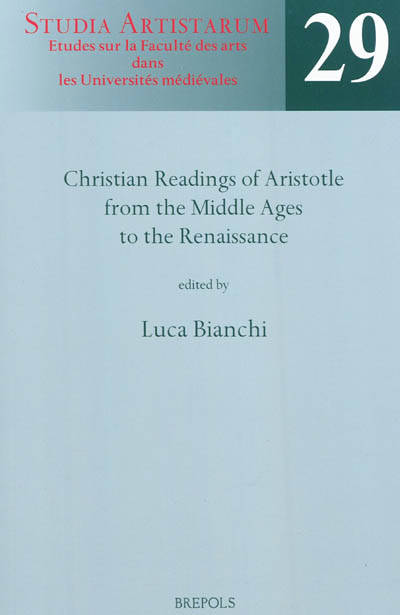
SA 29 Christian readings of Aristotle from the Middle Ages to the Renaissance, Bianchi
L. Bianchi
68,90 €
+ 137 points
Description
Widely recognized as one of the main characteristics of Latin Aristotelianism, the 'Christianisation'
of Aristotle from the thirteenth to the seventeenth century has received as yet little attention.
Aiming to answer the need for a more systematic investigation, the articles here collected
approach Christian readings of the Stagirite's works from different perspectives. Setting aside
abstract discussions about 'degrees of orthodoxy', they address a few specific questions: which
'images' of Aristotle were offered by Medieval and Renaissance interpreters, and in particular
how did some of them argue that - far from being a pagan or even an impious thinker - he
did not contradict the truths revealed by Holy Scripture? Which strategies did they adopt to
harmonize Aristotelian philosophy with Christian religion, or at least to avoid their clash? How
did they conceive the task of expounding Aristotle's thought? How did they understand and apply
the distinctions, developed since the mid-thirteenth century, between the point of view of
the philosophers and that of the believers, between what is true 'speaking naturally' and what
is true 'according to faith'? Were these distinctions - and other disclaimers or cautionary statements
- effective in protecting masters that taught Aristotle's texts from accusations of heresy?
To what extent were ideas issuing from Christian theology integrated within the Peripatetic
worldview, or even treated within Aristotelian commentaries?
Discussing these and related questions, the ten contributors to this volume examine relevant
doctrines of outstanding thinkers - Roger Bacon (Chiara Crisciani), Siger of Brabant and Henry
of Ghent (Pasquale Porro), Dante Alighieri (Gianfranco Fioravanti); offer a fine analysis of some
commentaries on the Nicomachean Ethics (Iacopo Costa), the Politics (Stefano Simonetta) and the
libri naturales (Amos Corbini); suggest innovative interpretations of the genesis of the Liber de bona
fortuna (Valérie Cordonier) and of the condemnation of 1277 (Dragos Calma); inspect minor
but significant figures of the Italian Renaissance such as Ludovico Beccadelli (Pietro Rossi) and
Cesare Crivellati (Luca Bianchi).
Spécifications
Parties prenantes
- Auteur(s) :
- Editeur:
Contenu
- Nombre de pages :
- 442
- Langue:
- Anglais, Français, Italien
- Collection :
- Tome:
- n° 29
Caractéristiques
- EAN:
- 9782503542379
- Date de parution :
- 04-10-11
- Format:
- Livre broché
- Format numérique:
- Trade paperback (VS)
- Dimensions :
- 152 mm x 234 mm
- Poids :
- 748 g


Seulement chez Librairie Club
+ 137 points sur votre carte client de Librairie Club
Cadeau


Les avis
Nous publions uniquement les avis qui respectent les conditions requises. Consultez nos conditions pour les avis.