


- Retrait en 2 heures
- Assortiment impressionnant
- Paiement sécurisé
- Toujours un magasin près de chez vous
- Retrait en 2 heures
- Assortiment impressionnant
- Paiement sécurisé
- Toujours un magasin près de chez vous



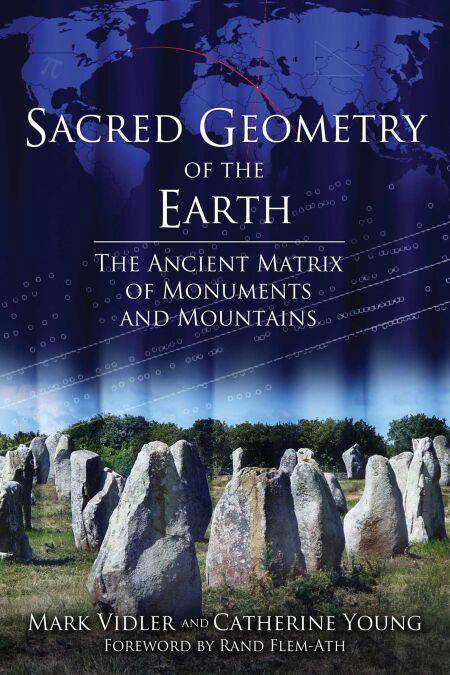
Sacred Geometry of the Earth EBOOK
The Ancient Matrix of Monuments and Mountains
Mark Vidler, Catherine Young
15,65 €
+ 15 points
Format
Description
Identifies the patterns of our planet’s design within the natural landscape
• Explains the geometry inherent in the mountains and coasts on all continents
• Reveals how ancient monuments were built to reflect and enhance the Earth’s design, often connecting sites around the world
• Includes detailed maps that show the simple geometrical relationships among the world’s mountains, coastlines, islands, and ancient monuments
From continent to continent across the globe, Mark Vidler and Catherine Young reveal that order is everywhere on Earth. On remote islands, soaring summits, and level deltas, they unveil natural topographic patterns related to pi, the golden ratio, and right-triangle geometry. And as the planet’s design emerges, it becomes clear that this hidden order in nature decided the location of ancient monuments the world over.
Through detailed maps, Vidler and Young show how the locations of megalithic monuments reflect and enhance a natural pattern on the Earth that connects its major features. The rows of standing stones at Carnac in France, for example, point to the summits of Mount Everest and K2, and Angkor Wat in Cambodia is on a straight line joining Mount Kilimanjaro in Africa and the tip of Cape Comorin in India. The authors examine the geography of many islands and each continent, including Antarctica, to show how the highest peak on each landmass falls on a line connecting coastal extremes. They reveal how circles of standing stones and man-made mounds mark intersections of these lines. They explore the connection between the Nazca lines in Peru and the Amazon, Nile, and Ganges deltas and explain how the locations of the Giza pyramids, Stonehenge, and Machu Picchu are integrated into the natural design on Earth.
As they uncover geometric patterns on the Earth line by line, point by point, the authors reveal how the world’s ancient monuments represent a form of transglobal communication that far predates the written word.
• Explains the geometry inherent in the mountains and coasts on all continents
• Reveals how ancient monuments were built to reflect and enhance the Earth’s design, often connecting sites around the world
• Includes detailed maps that show the simple geometrical relationships among the world’s mountains, coastlines, islands, and ancient monuments
From continent to continent across the globe, Mark Vidler and Catherine Young reveal that order is everywhere on Earth. On remote islands, soaring summits, and level deltas, they unveil natural topographic patterns related to pi, the golden ratio, and right-triangle geometry. And as the planet’s design emerges, it becomes clear that this hidden order in nature decided the location of ancient monuments the world over.
Through detailed maps, Vidler and Young show how the locations of megalithic monuments reflect and enhance a natural pattern on the Earth that connects its major features. The rows of standing stones at Carnac in France, for example, point to the summits of Mount Everest and K2, and Angkor Wat in Cambodia is on a straight line joining Mount Kilimanjaro in Africa and the tip of Cape Comorin in India. The authors examine the geography of many islands and each continent, including Antarctica, to show how the highest peak on each landmass falls on a line connecting coastal extremes. They reveal how circles of standing stones and man-made mounds mark intersections of these lines. They explore the connection between the Nazca lines in Peru and the Amazon, Nile, and Ganges deltas and explain how the locations of the Giza pyramids, Stonehenge, and Machu Picchu are integrated into the natural design on Earth.
As they uncover geometric patterns on the Earth line by line, point by point, the authors reveal how the world’s ancient monuments represent a form of transglobal communication that far predates the written word.
Spécifications
Parties prenantes
- Auteur(s) :
- Editeur:
Contenu
- Nombre de pages :
- 288
- Langue:
- Anglais
- Collection :
Caractéristiques
- EAN:
- 9781620554692
- Date de parution :
- 21-01-16
- Format:
- Ebook
- Protection digitale:
- Adobe DRM
- Format numérique:
- ePub


Seulement chez Librairie Club
+ 15 points sur votre carte client de Librairie Club
Cadeau


Les avis
Nous publions uniquement les avis qui respectent les conditions requises. Consultez nos conditions pour les avis.