


- Retrait en 2 heures
- Assortiment impressionnant
- Paiement sécurisé
- Toujours un magasin près de chez vous
- Retrait en 2 heures
- Assortiment impressionnant
- Paiement sécurisé
- Toujours un magasin près de chez vous



158,95 €
+ 317 points
Description
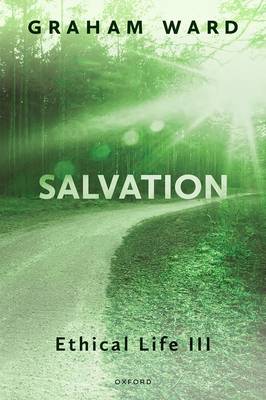
Salvation: Ethical Life III examines the meaning of salvation in Christian theology. Viewing all theological writing as a cultural production, Graham Ward rethinks key aspects of salvation^--^sin, death, atonement, and sanctification^--^through various lenses drawn from both the humanities and the sciences. This examination is divided into three parts. The first part explores what it is to be human: immersed in our environments, erring and death-bound, and reflecting upon who we are. The second part turns to the redemptive work of Christ by first examining so-called theories of the atonement and then analysing the redemptive process as it emerges in the seven last words of Jesus on the Cross. Proposing a universal salvation, the book develops the Pauline notion of recapitulation, the gathering of all things to their created origin in the Trinitarian Godhead. The final part then focusses upon the processes of this gathering in terms of spiritual formation. Ward moves from the initial hearing of the divine call, through to the way responding transforms perception, emotional life, and disposition. Foremost in this transformative process is the liberation of desire through which salvation culminates in coming to know as we are known and coming to love as we are loved. In an epilogue, the book reflects upon the life, theology, and poetry of Gerard Manley Hopkins, pointing to the role of failure in the process of redemption.
Spécifications
Parties prenantes
- Auteur(s) :
- Editeur:
Contenu
- Nombre de pages :
- 336
- Langue:
- Anglais
Caractéristiques
- EAN:
- 9780197907115
- Date de parution :
- 27-11-26
- Format:
- Livre relié
- Format numérique:
- Genaaid
- Dimensions :
- 156 mm x 234 mm


Seulement chez Librairie Club
+ 317 points sur votre carte client de Librairie Club
Cadeau


Les avis
Nous publions uniquement les avis qui respectent les conditions requises. Consultez nos conditions pour les avis.