


- Retrait en 2 heures
- Assortiment impressionnant
- Paiement sécurisé
- Toujours un magasin près de chez vous
- Retrait gratuit dans votre magasin Club
- 7.000.0000 titres dans notre catalogue
- Payer en toute sécurité
- Toujours un magasin près de chez vous



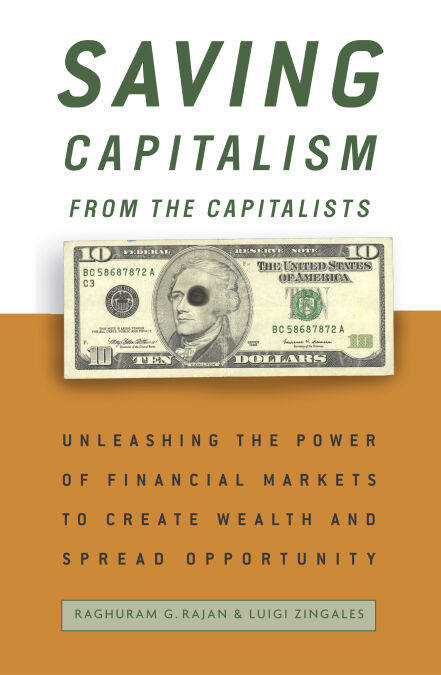
Saving Capitalism from the Capitalists EBOOK
How Open Financial Markets Challenge the Establishment and Spread Prosperity to Rich and Poor Alike
Raghuram Rajan, Luigi Zingales
Ebook | Anglais
14,98 €
+ 14 points
Description
Capitalism’s biggest problem is the executive in pinstripes who extols the virtues of competitive markets with every breath while attempting to extinguish them with every action.
Saving Capitalism from the Capitalists is a groundbreaking book that will radically change our understanding of the capitalist system, particularly the role of financial markets. They are the catalyst for inspiring human ingenuity and spreading prosperity. The perception of many, especially in the wake of never-ending corporate scandals, is that financial markets are parasitic institutions that feed off the blood, sweat, and tears of the rest of us. The reality is far different.
•Vibrant financial markets threaten the sclerotic corporate establishment and increase corporate mobility and opportunity. They are the reason why entrepreneurship flourishes and companies like The Home Depot and Wal-Mart—mere fly specks a quarter of a century ago—have surged as they have.
•They mean personal freedom and economic development for more people. Throughout history, and in most of the world today, the record is one of financial oppression. Elites restrict access to capital and severely limit not only general economic development but that of individuals as well.
•Open borders help check the political and economic elites and preserve competitive markets. The greatest danger of the antiglobalization movement is that it will keep the rich rich and the poor poor. Globalization forces countries to do what is necessary to make their economies productive, not what is best for incumbent elites. Open borders limit the ability of domestic politics to close down competition and to retard financial and economic growth.
•Markets are especially susceptible in economic downturns when the establishment can exploit public anger to restrict competition and access to capital. While markets must be free to practice “creative destruction,” Rajan and Zingales demonstrate the political and economic importance of a sustainable distribution of wealth and a baseline safety net. Capitalism needs a heart for its own good!
There are no iron laws of economics that condemn countries like Bangladesh to perpetual poverty or the United States to perpetual prosperity. The early years of the twentieth century saw vibrant, open financial markets that were creating widespread prosperity. Then came the “Great Reversal” during the Great Depression. It can—and will—happen again, unless there is greater understanding of what markets do, who benefits, and who really wants to either limit them or shut them down.
Saving Capitalism from the Capitalists breaks free of traditional ideological arguments of the right and left and points to a new way of understanding and spreading the extraordinary wealth-generating capabilities of capitalism.
Saving Capitalism from the Capitalists is a groundbreaking book that will radically change our understanding of the capitalist system, particularly the role of financial markets. They are the catalyst for inspiring human ingenuity and spreading prosperity. The perception of many, especially in the wake of never-ending corporate scandals, is that financial markets are parasitic institutions that feed off the blood, sweat, and tears of the rest of us. The reality is far different.
•Vibrant financial markets threaten the sclerotic corporate establishment and increase corporate mobility and opportunity. They are the reason why entrepreneurship flourishes and companies like The Home Depot and Wal-Mart—mere fly specks a quarter of a century ago—have surged as they have.
•They mean personal freedom and economic development for more people. Throughout history, and in most of the world today, the record is one of financial oppression. Elites restrict access to capital and severely limit not only general economic development but that of individuals as well.
•Open borders help check the political and economic elites and preserve competitive markets. The greatest danger of the antiglobalization movement is that it will keep the rich rich and the poor poor. Globalization forces countries to do what is necessary to make their economies productive, not what is best for incumbent elites. Open borders limit the ability of domestic politics to close down competition and to retard financial and economic growth.
•Markets are especially susceptible in economic downturns when the establishment can exploit public anger to restrict competition and access to capital. While markets must be free to practice “creative destruction,” Rajan and Zingales demonstrate the political and economic importance of a sustainable distribution of wealth and a baseline safety net. Capitalism needs a heart for its own good!
There are no iron laws of economics that condemn countries like Bangladesh to perpetual poverty or the United States to perpetual prosperity. The early years of the twentieth century saw vibrant, open financial markets that were creating widespread prosperity. Then came the “Great Reversal” during the Great Depression. It can—and will—happen again, unless there is greater understanding of what markets do, who benefits, and who really wants to either limit them or shut them down.
Saving Capitalism from the Capitalists breaks free of traditional ideological arguments of the right and left and points to a new way of understanding and spreading the extraordinary wealth-generating capabilities of capitalism.
Spécifications
Parties prenantes
- Auteur(s) :
- Editeur:
Contenu
- Nombre de pages :
- 384
- Langue:
- Anglais
Caractéristiques
- EAN:
- 9781400049165
- Date de parution :
- 17-02-03
- Format:
- Ebook
- Protection digitale:
- Adobe DRM
- Format numérique:
- ePub


Seulement chez Librairie Club
+ 14 points sur votre carte client de Librairie Club
Cadeau

Cadeau


Les avis
Nous publions uniquement les avis qui respectent les conditions requises. Consultez nos conditions pour les avis.