


- Retrait en 2 heures
- Assortiment impressionnant
- Paiement sécurisé
- Toujours un magasin près de chez vous
- Retrait en 2 heures
- Assortiment impressionnant
- Paiement sécurisé
- Toujours un magasin près de chez vous



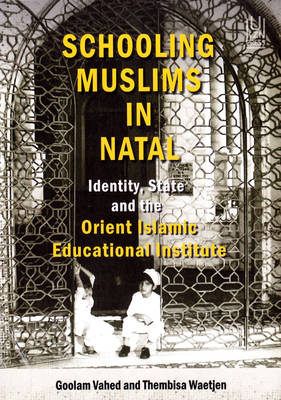
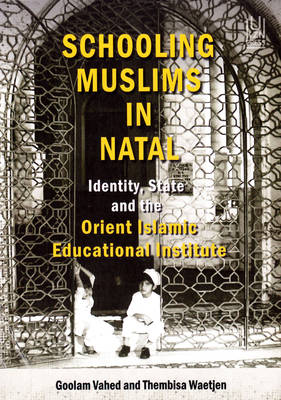
Schooling Muslims in Natal
Identity, State and the Orient Islamic Educational Institute
Goolam Vahed, Thembisa Waetjen
Livre broché | Anglais
54,45 €
+ 108 points
Description
The history of Muslim education in the east coast region of South Africa is the story of ongoing struggles by an immigrant religious minority under successive exclusionary forms of state. This book traces the labors and fortunes of a set of progressive idealists who established - via mobilizing merchant capital, transoceanic networks, and informal political influence - the Orient Islamic Educational Institute in 1943 to found schools and promote a secular curriculum that could be integrated with Islamic teaching. Through the story of the Durban flagship project - the Orient Islamic School - the book provides a fascinating account of the changing politics of religious identity, education, and citizenship in South Africa. Across a century of changing political expectations, as the region transformed from a colony to a nation-state to a multi-racial democracy, concerns for social mobility, civic inclusion, and the survival of Islamic identity on the periphery of the Indian Ocean world were invested in the education of the young. From the late 19th century, Gujarati Muslim merchants who settled in Natal built mosques and madressas, while their progeny carried on the strong traditions of community patronage and civic leadership. Aligned to Gandhi's Congress initiatives for Indian civic recognition, they worked across differences of political strategy, economic class, ethnicity, and religious identity to champion modern education for a continually ghettoized diaspora. In common was the threat of a state that, long before the legal formation of apartheid, managed diversity in deference to white racial hysteria over 'Indian penetration' and an 'Asiatic menace.' This is the story of confrontation, cooperation, and compromise by an officially marginalized but still powerful set of 'founding fathers, ' along with their centrality in the histories of education, urban space, and Muslim identity in this region of Africa. *** This engrossing account of the vision and history of the Orient School in KwaZulu-Natal is illuminated by deep research and intimate experience. Vahed and Waetjen show how the Orient enabled Muslims to envision a new future around notions of resistance, collective action and a religious modernity. This is a much-needed contribution to the scholarship on education, Islam and the shaping of identity in South Africa. - Gabeba Baderoon, Co-Director of the African Feminist Initiative at Pennsylvania State University and Extraordinary Professor of English at Stellenbosch University *** Goolam Vahed and Thembisa Waetjen have given us a lucid and penetrating account of schooling Muslims in KwaZulu-Natal. It links an Indian Muslim schooling tradition to broader education movements in public life, to local and global trends, all within a clearly articulated political context. - Abdulkader Tayob, Professor of Religious Studies and NRF Chair of islam, African Publics and Religious Values at the University of Cape Town [Subject: Social History, African Studies, Islamic Studies, Religious Studies, Diaspora Studies, Migration Studies, Education, Politics
Spécifications
Parties prenantes
- Auteur(s) :
- Editeur:
Contenu
- Nombre de pages :
- 470
- Langue:
- Anglais
Caractéristiques
- EAN:
- 9781869142926
- Date de parution :
- 01-06-15
- Format:
- Livre broché
- Format numérique:
- Trade paperback (VS)
- Dimensions :
- 165 mm x 239 mm
- Poids :
- 725 g


Seulement chez Librairie Club
+ 108 points sur votre carte client de Librairie Club
Cadeau


Les avis
Nous publions uniquement les avis qui respectent les conditions requises. Consultez nos conditions pour les avis.