Club utilise des cookies et des technologies similaires pour faire fonctionner correctement le site web et vous fournir une meilleure expérience de navigation.
Ci-dessous vous pouvez choisir quels cookies vous souhaitez modifier :
Club utilise des cookies et des technologies similaires pour faire fonctionner correctement le site web et vous fournir une meilleure expérience de navigation.
Nous utilisons des cookies dans le but suivant :
Assurer le bon fonctionnement du site web, améliorer la sécurité et prévenir la fraude
Avoir un aperçu de l'utilisation du site web, afin d'améliorer son contenu et ses fonctionnalités
Pouvoir vous montrer les publicités les plus pertinentes sur des plateformes externes
Club utilise des cookies et des technologies similaires pour faire fonctionner correctement le site web et vous fournir une meilleure expérience de navigation.
Ci-dessous vous pouvez choisir quels cookies vous souhaitez modifier :
Cookies techniques et fonctionnels
Ces cookies sont indispensables au bon fonctionnement du site internet et vous permettent par exemple de vous connecter. Vous ne pouvez pas désactiver ces cookies.
Cookies analytiques
Ces cookies collectent des informations anonymes sur l'utilisation de notre site web. De cette façon, nous pouvons mieux adapter le site web aux besoins des utilisateurs.
Cookies marketing
Ces cookies partagent votre comportement sur notre site web avec des parties externes, afin que vous puissiez voir des publicités plus pertinentes de Club sur des plateformes externes.
Une erreur est survenue, veuillez réessayer plus tard.
Il y a trop d’articles dans votre panier
Vous pouvez encoder maximum 250 articles dans votre panier en une fois. Supprimez certains articles de votre panier ou divisez votre commande en plusieurs commandes.
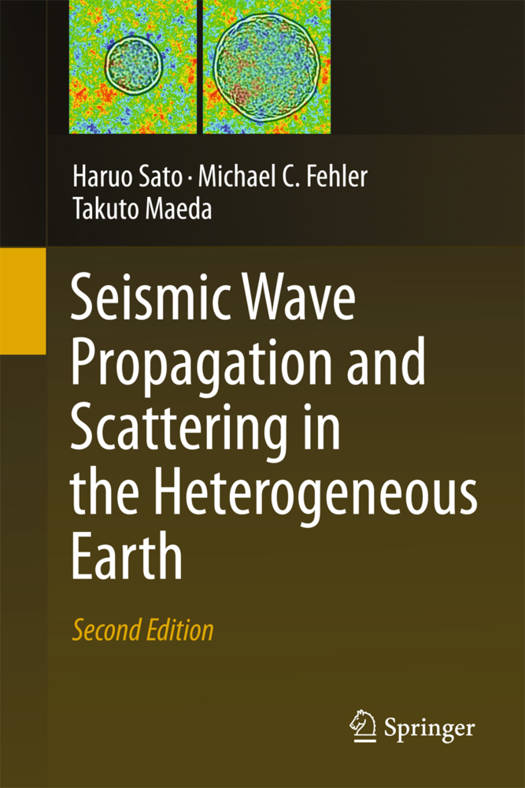
Seismic waves - generated both by natural earthquakes and by man-made sources - have produced an enormous amount of information about the Earth's interior. In classical seismology, the Earth is modeled as a sequence of uniform horizontal layers (or spherical shells) having different elastic properties and one determines these properties from travel times and dispersion of seismic waves. The Earth, however, is not made of horizontally uniform layers, and classic seismic methods can take large-scale inhomogeneities into account. Smaller-scale irregularities, on the other hand, require other methods. Observations of continuous wave trains that follow classic direct S waves, known as coda waves, have shown that there are heterogeneities of random size scattered randomly throughout the layers of the classic seismic model. This book focuses on recent developments in the area of seismic wave propagation and scattering through the randomly heterogeneous structure of the Earth, with emphasis on the lithosphere. The presentation combines information from many sources to present a coherent introduction to the theory of scattering in acoustic and elastic materials and includes analyses of observations using the theoretical methods developed. The second edition especially includes new observational facts such as the spatial variation of medium inhomogeneities and the temporal change in scattering characteristics and recent theoretical developments in the envelope synthesis in random media for the last ten years. Mathematics is thoroughly rewritten for improving the readability. Written for advanced undergraduates or beginning graduate students of geophysics or planetary sciences, this book should also be of interest to civil engineers, seismologists, acoustical engineers, and others interested in wave propagation through inhomogeneous elastic media.