


En raison d'une grève chez bpost, des retards de livraison peuvent survenir. Besoin de quelque chose en urgence ? Optez pour un retrait en magasin ou rendez-vous dans une Librairie Club à proximité.
- Retrait en 2 heures
- Assortiment impressionnant
- Paiement sécurisé
- Toujours un magasin près de chez vous
En raison d'une grève chez bpost, des retards de livraison peuvent survenir. Besoin de quelque chose en urgence ? Optez pour un retrait en magasin ou rendez-vous dans une Librairie Club à proximité.
- Retrait en 2 heures
- Assortiment impressionnant
- Paiement sécurisé
- Toujours un magasin près de chez vous



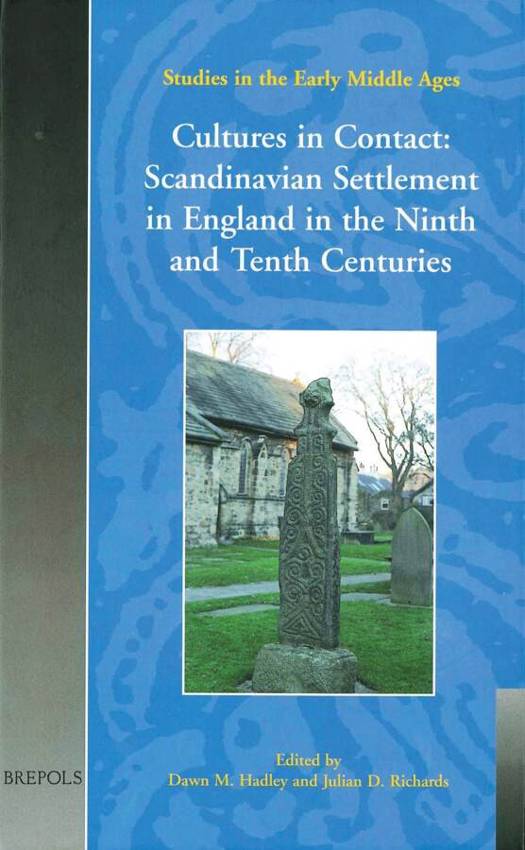
Sem 02 Cultures in Contact
Scandinavian Settlement in England in the 9/10th Centuries (Sem 2)
Dawn Hadley
74,20 €
Description
This volume examines the Scandinavian impact on England in the ninth and tenth centuries, with particular reference to Scandinavian settlement and the diverse ways in which the Scandinavians and the native populations responded to each other. Many previous studies have described the settlement as involving a rapid assimilation of the settlers with native society and culture, and a swift process of integration. This volume challenges that view and shows that the processes of assimilation, integration and accommodation were gradual and complex, displaying important regional variations. Where did the Scandinavians come from? What type of society did they eventually settle into? What were the implications of the drawing of different cultures in contact, and how is this portrayed in the surviving material? An important aim of this volume is to open up new interdisciplinary dialogue in Viking Studies, and it analyses documentary, archaeological, artefactual and linguistic evidence. The volume also seeks to develop more theoretically sophisticated accounts of Scandinavian settlement, and brings the study of this subject up-to-date in terms of developments in other branches of history, archaeology and linguistics. Recent discussion in other fields concerning, for example, material culture and language have shown that they did not simply reflect changes in society but were also active, constituent elements in creating and re-creating social and cultural identities. The volume focuses on the creation of local and regional identities and affinities, and moves on from the traditional depiction of the issues in terms of a simple dichotomy of 'Scandinavian' and 'English'. It takes a more rigorously contextual approach than has hitherto been the case in the study of Scandinavian settlement, and seeks to throw new light on the consequences of cultures in contact.
Spécifications
Parties prenantes
- Auteur(s) :
- Editeur:
Contenu
- Nombre de pages :
- 339
- Langue:
- Anglais
- Collection :
- Tome:
- n° 2
Caractéristiques
- EAN:
- 9782503509785
- Date de parution :
- 31-12-00
- Format:
- Livre relié
- Format numérique:
- Genaaid
- Dimensions :
- 164 mm x 250 mm
- Poids :
- 725 g



Seulement chez Librairie Club
Cadeau


Les avis
Nous publions uniquement les avis qui respectent les conditions requises. Consultez nos conditions pour les avis.