


- Retrait en 2 heures
- Assortiment impressionnant
- Paiement sécurisé
- Toujours un magasin près de chez vous
- Retrait gratuit dans votre magasin Club
- 7.000.0000 titres dans notre catalogue
- Payer en toute sécurité
- Toujours un magasin près de chez vous



Description
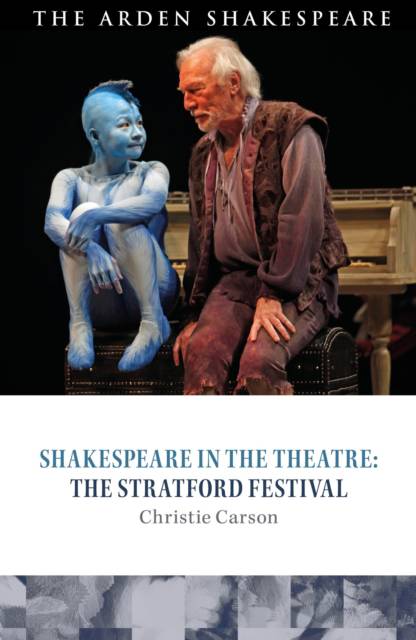
This analysis of the Stratford Festival examines the full history of one of the largest and oldest dedicated centres for the performance of Shakespeare in North America.
In English-speaking Canada, the Festival has become the unofficial national theatre, drawing both praise and criticism. Dividing its history into three distinct periods, the volume begins with the foundation of the company, moving through its middle years of expansion and securing stability, and ending with an exploration of staging Shakespeare in the 21st century. Through case studies of productions, covering each artistic director from Tyrone Guthrie to Antoni Cimolino, it highlights issues of national identity but also the relationship between actor and audience on the Festival's unique thrust stage. It not only explores the work of international stars such as Christopher Plummer, but also that of longstanding company members William Hutt and Martha Henry, emphasizing the Festival's collective spirit.
This book argues that the Stratford Festival holds an influential position in the theatre world generally and in the Shakespeare performance environment specifically. Initially this was because of the original stage built for its opening, but increasingly it has been due to the way that it has used Shakespeare's work to articulate complex questions about identity and utilized technology to reach new audiences. The Festival and its collaborative working methods grew out of a particular social and political climate, and when the actors and directors who trained at the Festival took their training and its influences elsewhere, they spread its impact.
In English-speaking Canada, the Festival has become the unofficial national theatre, drawing both praise and criticism. Dividing its history into three distinct periods, the volume begins with the foundation of the company, moving through its middle years of expansion and securing stability, and ending with an exploration of staging Shakespeare in the 21st century. Through case studies of productions, covering each artistic director from Tyrone Guthrie to Antoni Cimolino, it highlights issues of national identity but also the relationship between actor and audience on the Festival's unique thrust stage. It not only explores the work of international stars such as Christopher Plummer, but also that of longstanding company members William Hutt and Martha Henry, emphasizing the Festival's collective spirit.
This book argues that the Stratford Festival holds an influential position in the theatre world generally and in the Shakespeare performance environment specifically. Initially this was because of the original stage built for its opening, but increasingly it has been due to the way that it has used Shakespeare's work to articulate complex questions about identity and utilized technology to reach new audiences. The Festival and its collaborative working methods grew out of a particular social and political climate, and when the actors and directors who trained at the Festival took their training and its influences elsewhere, they spread its impact.
Spécifications
Parties prenantes
- Auteur(s) :
- Editeur:
Contenu
- Nombre de pages :
- 272
- Langue:
- Anglais
- Collection :
Caractéristiques
- EAN:
- 9781350380844
- Date de parution :
- 22-01-2026
- Format:
- Livre broché
- Format numérique:
- Trade paperback (VS)
- Dimensions :
- 129 mm x 198 mm
- Poids :
- 263 g


Seulement chez Librairie Club
+ 135 points sur votre carte client de Librairie Club
Cadeau

Cadeau


Les avis
Nous publions uniquement les avis qui respectent les conditions requises. Consultez nos conditions pour les avis.