


- Retrait en 2 heures
- Assortiment impressionnant
- Paiement sécurisé
- Toujours un magasin près de chez vous
- Retrait gratuit dans votre magasin Club
- 7.000.0000 titres dans notre catalogue
- Payer en toute sécurité
- Toujours un magasin près de chez vous



130,95 €
+ 261 points
Description
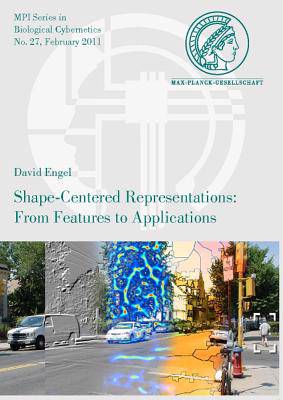
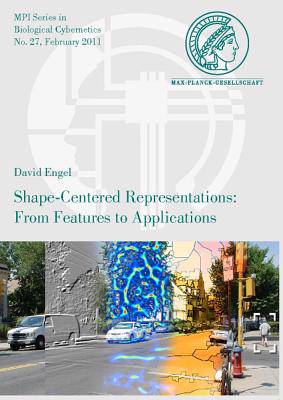
Computer vision aims to teach machines and algorithms to 'see' with the ultimate goal of creating 'intelligent' applications and devices that can provide assistance to humans in a wide array of scenarios. This thesis presents an investigation of computer vision on three layers: low-level features, mid-level representations and high-level applications. Each of the layers depends on the previous ones while also generating constraints and requirements for them. At the application layer human-machine interfaces come into play and link the human perception to computer vision. By studying all layers we can gain a much deeper insight into the interplay of different methods, than by examining an isolated problem. Furthermore, we are able to factor constraints imposed by different layers and the users into the design of the algorithms, instead of optimizing a single method based purely on algorithmic performance measures. After a brief introduction in Chapter 1, Chapter 2 addresses the feature layer and describes our novel shape-centered interest points that play a vital role throughout this thesis. These interest points are formed at location of high local symmetry as opposed to corner interest points which occur along the outline of shapes. Experiments show that they are very robust with respect to common natural image transformations, such as scaling, rotation and the introduction of noise and clutter. Based on these features Chapter 3 presents two strategies to build robust mid-level image representations. First, a novel feature grouping method is introduced. The scheme offers a powerful way to combine the advantages of shape-centered interest points, namely robustness and a tight connection to a unique shape, and corner-based interest points, namely strong descriptors. Furthermore, Chapter 3 introduces a novel set of medial feature superpixels, that represent a feed-forward way to divide the image into small, visually-homogeneous regions offering a compact and efficient mid-level representation of the image information. Finally, Chapter 4 bridges the gap between computer vision and the human observer by introducing three applications that employ the shape-centered representations from the two previous Chapters. First a multi-class scene labeling scheme is presented that produces dense annotations of images, combining a local prediction step with a global optimization scheme. Then, Section 4.2 introduces a novel image retrieval tool that operates on highlevel semantic information. Such semantic annotations could be generated by automatic annotation schemes as the one described in the previous Section. Finally, the novel idea of predicting the detectability of a pedestrian in a driver assistance context is put forward and investigated. The different modules of this thesis are tightly connected and inter-dependent, in the framework of shape-centered representations. The connections between the modules avails the possibility to feed information back from higher to lower layers and optimize the design choices there. This thesis provides a framework looking at static phenomena but the presented approach could be extended to the analysis of dynamic scenes as well.
Spécifications
Parties prenantes
- Auteur(s) :
- Editeur:
Contenu
- Nombre de pages :
- 191
- Langue:
- Anglais
Caractéristiques
- EAN:
- 9783832528201
- Date de parution :
- 09-05-11
- Format:
- Livre broché
- Format numérique:
- Trade paperback (VS)
- Dimensions :
- 145 mm x 211 mm
- Poids :
- 254 g


Seulement chez Librairie Club
+ 261 points sur votre carte client de Librairie Club
Cadeau

Cadeau


Les avis
Nous publions uniquement les avis qui respectent les conditions requises. Consultez nos conditions pour les avis.