


- Retrait en 2 heures
- Assortiment impressionnant
- Paiement sécurisé
- Toujours un magasin près de chez vous
- Retrait en 2 heures
- Assortiment impressionnant
- Paiement sécurisé
- Toujours un magasin près de chez vous



58,95 €
+ 117 points
Description
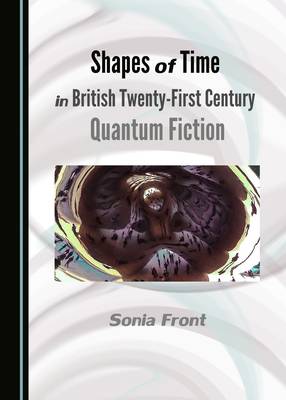
This book addresses the notion of time and temporality and its various conceptualizations in the theories of the new physics, utilized as a thematic and formal framework in the British novel of the twenty-first century. As the Newtonian conception of reality does not provide a reliable framework within which to situate human experience and generate meaning, fiction writers have recognized quantum mechanics as a potent source from which to draw in search of new metaphors. The quantum has become a part of the understanding of reality, and its concepts and assumptions have been absorbed into the textual structure and content of literary fiction. Shapes of Time in British Twenty-First Century Quantum Fiction examines human temporality as mediated by the timeshapes imagined within the context of the new physics, and explores the philosophical implications for human temporality and identity of situating an individual within the realm of physical time. Its chapters deal with various concepts of the new physics connected with temporality, and their appropriation in a selected novel: parallel universes in Andrew Crumey's Sputnik Caledonia (2008), eternal recurrence and Poincare's theorem in David Mitchell's Cloud Atlas (2004), chaos theory in Samantha Harvey's The Wilderness (2009), and the end of time in Scarlett Thomas's The End of Mr. Y (2006). Each of them corresponds to a different conceptual shape of time: tree, concertina, spiral and snapshot, respectively, which is enacted on the formal level. Analyzing the new time constructs in a narrative, this book thus uncovers passages between scientific and humanistic standpoints, and reveals quantum fiction to be an effective tool for visualizing the subjective non-homogenous experience of private time.
Spécifications
Parties prenantes
- Auteur(s) :
- Editeur:
Contenu
- Nombre de pages :
- 180
- Langue:
- Anglais
Caractéristiques
- EAN:
- 9781443880299
- Date de parution :
- 26-08-15
- Format:
- Livre relié
- Format numérique:
- Genaaid
- Dimensions :
- 147 mm x 208 mm
- Poids :
- 385 g


Seulement chez Librairie Club
+ 117 points sur votre carte client de Librairie Club
Cadeau


Les avis
Nous publions uniquement les avis qui respectent les conditions requises. Consultez nos conditions pour les avis.