


- Retrait en 2 heures
- Assortiment impressionnant
- Paiement sécurisé
- Toujours un magasin près de chez vous
- Retrait gratuit dans votre magasin Club
- 7.000.0000 titres dans notre catalogue
- Payer en toute sécurité
- Toujours un magasin près de chez vous



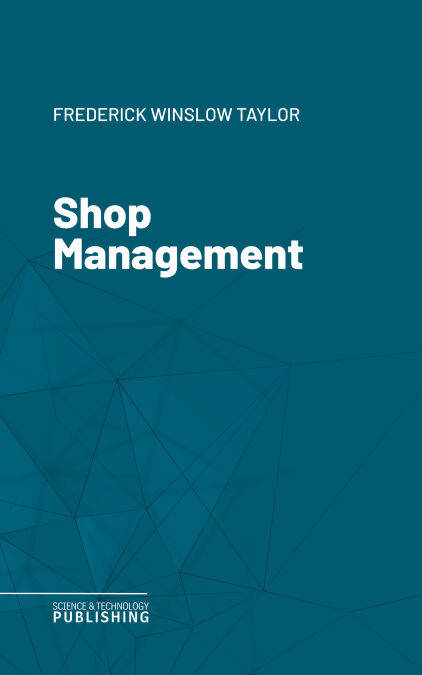
Description
Shop Management by Frederick Winslow Taylor is a seminal work in the field of industrial engineering and management, first published in 1903. This influential book lays the foundation for modern management practices by introducing the principles of scientific management, a systematic approach to improving efficiency and productivity in manufacturing and business operations. Drawing from his extensive experience as a mechanical engineer and manager, Taylor meticulously analyzes the organization of work in machine shops and factories, emphasizing the importance of planning, standardization, and the division of labor. The book delves into the challenges faced by shop managers, such as inefficient work methods, lack of coordination, and poor utilization of resources. Taylor advocates for the use of time studies, detailed instructions, and incentive systems to motivate workers and optimize performance. He discusses the role of foremen, the necessity of accurate cost accounting, and the implementation of systematic training programs to ensure that employees are well-equipped to perform their tasks efficiently. Throughout Shop Management, Taylor provides practical examples, case studies, and detailed charts to illustrate his concepts, making the book both a theoretical treatise and a practical guide. He explores the psychological aspects of management, recognizing the importance of cooperation between workers and management, and the need for mutual respect and understanding. Taylor’s work also addresses resistance to change and offers strategies for overcoming obstacles to the adoption of scientific management principles. Shop Management is not only a historical document but also a timeless resource for managers, engineers, and students interested in the evolution of management thought. Its insights into workflow optimization, labor relations, and organizational structure continue to influence contemporary management practices, making it an essential read for anyone seeking to understand the roots of modern industrial efficiency and productivity.
Spécifications
Parties prenantes
- Auteur(s) :
- Editeur:
Contenu
- Langue:
- Anglais
Caractéristiques
- EAN:
- 9782528100691
- Date de parution :
- 31-08-25
- Format:
- Ebook
- Protection digitale:
- /
- Format numérique:
- ePub



Seulement chez Librairie Club
+ 19 points sur votre carte client de Librairie Club
Cadeau

Cadeau


Les avis
Nous publions uniquement les avis qui respectent les conditions requises. Consultez nos conditions pour les avis.