


En raison d'une grève chez bpost, des retards de livraison peuvent survenir. Besoin de quelque chose en urgence ? Optez pour un retrait en magasin ou rendez-vous dans une Librairie Club à proximité.
- Retrait en 2 heures
- Assortiment impressionnant
- Paiement sécurisé
- Toujours un magasin près de chez vous
En raison d'une grève chez bpost, des retards de livraison peuvent survenir. Besoin de quelque chose en urgence ? Optez pour un retrait en magasin ou rendez-vous dans une Librairie Club à proximité.
- Retrait en 2 heures
- Assortiment impressionnant
- Paiement sécurisé
- Toujours un magasin près de chez vous



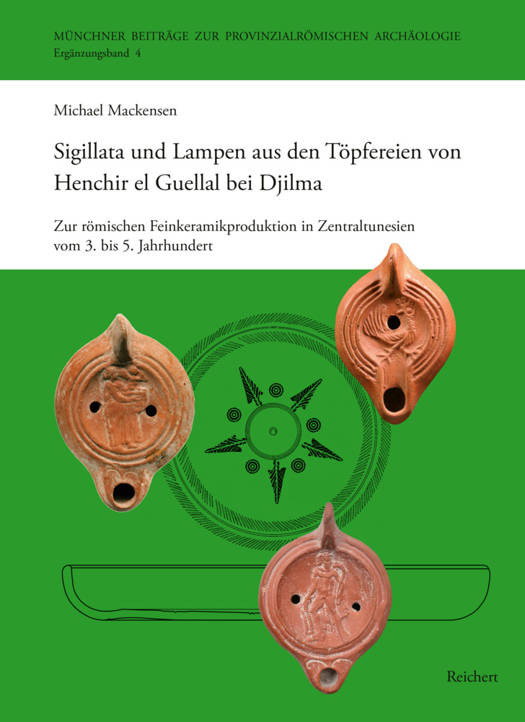
Sigillata Und Lampen Aus Den Topfereien Von Henchir El Guellal Bei Djilma
Zur Romischen Feinkeramikproduktion in Zentraltunesien Vom 3. Bis 5. Jahrhundert
Michael Mackensen
72,95 €
+ 145 points
Description
English summary: The Roman production centre for African red slip ware (= ARS) and lamps at Henchir el Guellal near Djilma is located approx. 130 km southwest of Hadrumetum/Sousse in the interior of central Tunisia. It was one of the major rural pottery centres, producing not only for the regional market but also for sea-based long-distance trade, with its products distributed in most of the Mediterranean. The previously little-known range of products is assessed on the basis of finds from two surveys (1984/85, 1991). There have been no excavations in the area of the mid Imperial/late Antique ARS and lamp potteries. The present investigation therefore focuses on the typochronological and archaeometric analysis of the available fine wares. With the help of a chemical reference group specific to Djilma and additional pXRF measurements, ARS vessels with applique decoration or stamped decoration and lamps from other findspots or without a recorded findspot could be reassigned to the production range of Djilma. The aim was to reconstruct as far as possible the repertoire of forms of the ARS vessels and lamps produced from around AD 220/230 onwards. While the plain standard forms of ARS tableware from the 3rd to early 5th century, decorated with pottery-specific stamp-types from the middle of the 4th century onwards, were produced at Djilma, such forms are missing from the middle of the 5th century onwards. This applies accordingly to stamp-types with Christograms and cross monograms, which became increasingly popular from 430/440 onwards, a phenomenon that has been observed in other ARS potteries in northern and central Tunisia. A new, differentiated typology (HGD I A-VII A5) has been developed for ARS lamps, replacing the previous classifications. Noteworthy is the adoption of figurative appliques from the pottery centre of Sidi Marzouk Tounsi, 40 km away, which were incorporated as decorative motifs on the discus of lamps made at Djilma. However, discus decorative motifs bearing Christian symbols were not used there in the second quarter of the 5th century, and a dominant lamp type (Atlante X A1a) from the pottery centre of Sidi Marzouk Tounsi was not imitated. It is possible that, due to a lack of innovation in ARS pottery, i.e. new shapes and stamped decorations, as well as in lamps, Djilma was no longer able to meet the demand for high-quality fine wares in the province of Byzacena, or in neighbouring provinces and beyond. It is uncertain whether the political changes of the 430s and the stabilising Vandal rule with the capture of Carthage (AD 439) and the entire province of Africa Proconsularis had a direct impact on large handicraft workshops such as pottery production centres. It is noteworthy that in Byzacena, following the peace treaty concluded between the Vandal king Geiserich and the Roman emperor Valentinian III in AD 442, the pottery centre of Sidi Marzouk Tounsi continued to function, whereas ARS and lamp production in Djilma must have come to an end around AD 430/440 or the middle of the 5th century. German description: Das romische Produktionszentrum fur Sigillata und Lampen in Henchir el Guellal bei Djilma liegt ca. 130 km sudwestlich von Hadrumetum/Sousse in Zentraltunesien. Dabei handelt es sich um eines der grossen landlichen Topfereizentren, das nicht nur fur den regionalen Absatzmarkt produzierte, sondern dessen Erzeugnisse uber den seegestutzten Fernhandel auch weite Verbreitung im gesamten Mittelmeerraum erlangten. Das bislang kaum bekannte Produktionsspektrum wird anhand des Fundmaterials aus zwei Surveys (1984/85, 1991) beurteilt; Ausgrabungen im Bereich der mittelkaiserzeitlich-spatantiken Sigillata- und Lampentopfereien fehlen. Deshalb steht die typochronologische und archaometrische Analyse der Feinkeramik im Mittelpunkt der Untersuchung. Mit Hilfe einer fur Djilma spezifischen chemischen Referenzgruppe und von pXRF-Messungen konnten appliken- und stempelverzierte Sigillatagefasse und Lampen ohne uberlieferte Provenienz dem Produktionsspektrum wieder zugewiesen werden. Zielsetzung war es, das Formenrepertoire der ab ca. 220/230 produzierten Sigillatagefasse und der Lampen weitestgehend zu rekonstruieren. Wahrend die glatten, ab der Mitte des 4. Jahrhunderts mit topfereispezifischen Stempeltypen verzierten Standardformen des Tafelgeschirrs des 3. bis fruhen 5. Jahrhunderts in Djilma hergestellt wurden, fehlen solche ab der Mitte des 5. Jahrhunderts. Dies gilt entsprechend fur Stempeltypen mit ab 430/440 immer beliebter werdenden Christogrammen und Kreuzmonogrammen, ein Phanomen, das sich auch in anderen Sigillatatopfereien in Nord- und Zentraltunesien beobachten lasst.Fur die Sigillatalampen wurde eine neue, differenzierte Typologie (HGD I A-VII A5) entwickelt, die die bisherigen Typenubersichten ersetzt. Bemerkenswert ist die Ubernahme von figurlichen Appliken der im 40 km entferntenTopfereizentrum von Sidi Marzouk Tounsi hergestellten Gefasskeramik, die man in Djilma als Spiegeldekormotive bei Lampen einfugte. Spiegeldekormotive mit christlichen Symbolen wurden im zweiten Viertel des 5. Jahrhunderts nicht verwendet und ein dominierender Lampentyp (Atlante X A1a) des Topfereizentrums von Sidi Marzouk Tounsi nicht imitiert. Moglicherweise war Djilma mangels topferischer Innovationen bei der Sigillatagefasskeramik, d. h. neuer Formen und Stempeldekore, ebenso wie bei den Lampen nicht mehr in der Lage, dem Bedarf an hochwertiger Feinkeramik in der Provinz Byzacena, in den benachbarten Provinzen und daruber hinaus nachzukommen. Ob die politischen Veranderungen der 30er Jahre des 5. Jahrhunderts und die vandalische Herrschaft mit Einnahme Karthagos (439) und der gesamten Provinz Africa Proconsularis unmittelbare Auswirkungen auf grosse Handwerksbetriebe hatte, ist unsicher. Bemerkenswert ist, dass in der Byzacena nach dem 442 zwischen dem vandalischen Konig Geiserich mit dem romischen Kaiser Valentinianus III. geschlossenen Friedensvertrag das Topfereizentrum Sidi Marzouk Tounsi fortbestand, dagegen mit dem Ende der Sigillata- und Lampenproduktion in Djilma um 430/440 oder um die Mitte des 5. Jahrhunderts gerechnet werden muss.
Spécifications
Parties prenantes
- Auteur(s) :
- Editeur:
Contenu
- Nombre de pages :
- 312
- Langue:
- Allemand
- Collection :
Caractéristiques
- EAN:
- 9783752009095
- Date de parution :
- 13-01-26
- Format:
- Livre relié
- Format numérique:
- Genaaid
- Dimensions :
- 210 mm x 297 mm
- Poids :
- 181 g


Seulement chez Librairie Club
+ 145 points sur votre carte client de Librairie Club
Cadeau

Cadeau


Les avis
Nous publions uniquement les avis qui respectent les conditions requises. Consultez nos conditions pour les avis.